Compliance Scoring: How to Rate Your Ad Creative Before Submission
The Anxiety of the "Submit" Button You’ve spent three weeks on the perfect campaign. The copy is punchy, the visuals are high-end, and the offer is irresistible. You hover your mouse over the "Submit" button on Meta or Google Ads, but there’s a nagging feeling in your gut. Will this get flagged? Wil
The Anxiety of the "Submit" Button
You’ve spent three weeks on the perfect campaign. The copy is punchy, the visuals are high-end, and the offer is irresistible. You hover your mouse over the "Submit" button on Meta or Google Ads, but there’s a nagging feeling in your gut. Will this get flagged? Will the entire ad account get disabled because of a single misplaced word or an over-aggressive claim?
If you work in a regulated industry like fintech, healthcare, or gaming, this isn't just a minor worry—it’s a daily reality. In fact, a recent industry survey found that nearly 30% of ads in highly regulated sectors are rejected on their first submission, leading to weeks of delays and lost revenue. This is where ad compliance scoring becomes your secret weapon.
Instead of crossing your fingers and hoping for the best, imagine having a quantitative "health check" for your creative before the platform’s bots ever see it. In this guide, we’re going to break down how to rate your ad creative, what metrics matter, and how to build a pre-submission workflow that keeps your accounts safe and your campaigns running.
What Exactly is Ad Compliance Scoring?
Think of ad compliance scoring as a credit score for your marketing assets. Just as a bank uses a score to determine the risk of lending you money, a compliance score determines the risk of your ad violating platform policies or federal regulations. It is a numerical value—often from 1 to 100—that represents how likely your ad is to pass a manual or automated review.
Why does a numerical rating matter? Because "it looks okay to me" isn't a strategy. When you assign an ad creative compliance rating, you move from subjective opinions to objective data. You can set a threshold: for instance, any ad scoring below an 85 requires a mandatory rewrite.
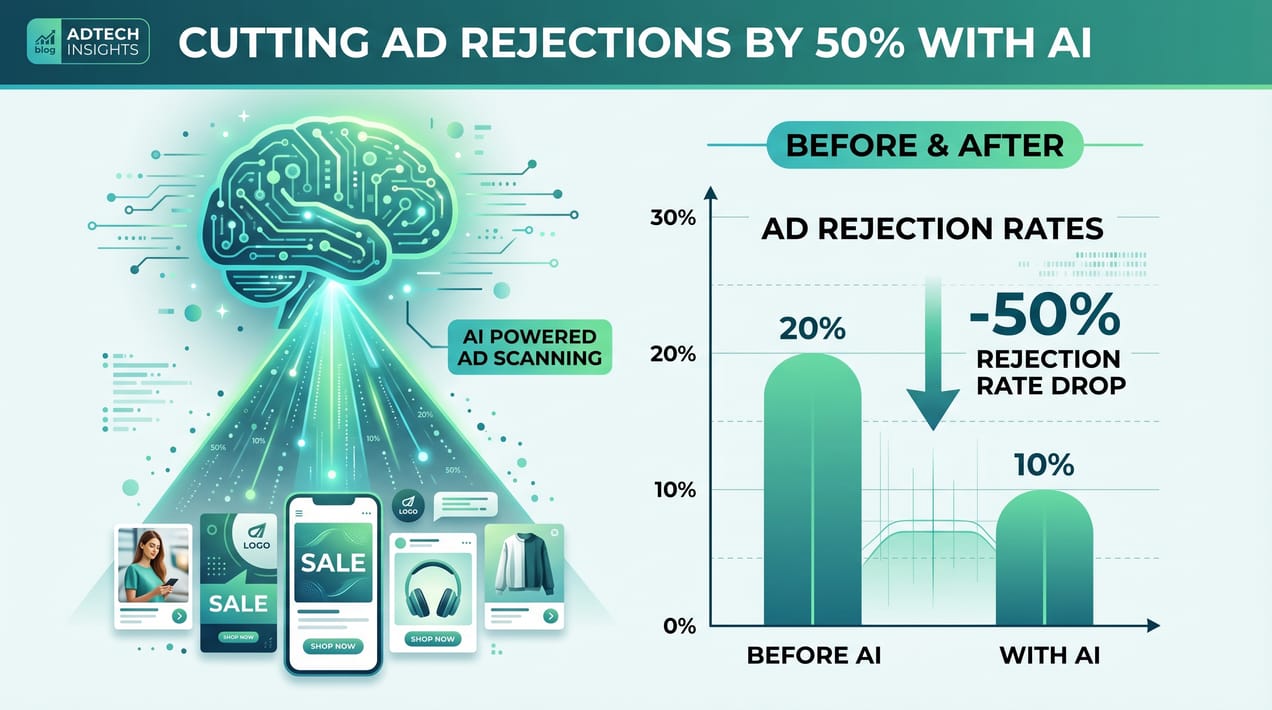
According to data from digital marketing audits, companies that implement a formal pre-submission ad scoring process reduce their ad rejection rate by an average of 42%. By quantifying risk, you empower your creative team to push boundaries without crossing the line into a "red zone" violation.
The High Price of "Trial and Error"
In the early days of digital marketing, "trial and error" was the standard operating procedure. You’d upload a dozen variations, see which ones got rejected, and move on. Those days are over. Platform algorithms have become significantly more punitive. A single "disapproved" ad is a nuisance; a pattern of "disapproved" ads is a fast track to a permanent account ban.
Have you ever considered the true cost of a single rejection? It’s not just the time spent editing. It’s the loss of momentum in the learning phase, the wasted salary hours of your media buyers, and the potential "blacklisting" of your domain. Research suggests that the average mid-sized brand loses $15,000 in potential revenue for every 48 hours their ad account is offline.
When you use a compliance risk score, you are essentially buying insurance for your brand’s reputation. You’re ensuring that your relationship with the platforms remains healthy, which often leads to lower CPMs and faster approval times in the long run. Are you willing to gamble your entire Q4 budget on a "maybe"?
Components of an Effective Ad Creative Compliance Rating
So, how do you actually build a score? You can’t just pull a number out of thin air. A robust ad creative compliance rating should be based on four distinct pillars. Each pillar contributes to the final score, allowing you to see exactly where the "leaks" are in your creative process.
- Visual Analysis: Are you using prohibited imagery? For example, in healthcare, "before and after" photos are a major red flag. In finance, showing stacks of cash can trigger "get rich quick" filters.
- Copy & Text Sentiment: Platforms look for "you" language that implies personal attributes (e.g., "Are you broke?"). They also scan for superlative claims like "guaranteed" or "best in the world."
- Landing Page Consistency: Your ad score doesn't end with the ad itself. If your ad promises a "Free Guide" but the landing page asks for a $50 deposit, your compliance score will plummet.
- Regulatory Specifics: This is the most complex pillar. Does your ad meet the specific requirements of the FDA, FTC, or FINRA? This includes mandatory disclosures and font size requirements.
By weighting these pillars—perhaps 30% for copy, 30% for visuals, and 40% for regulatory alignment—you create a holistic view of your campaign’s safety. Statistics show that 65% of ad rejections are caused by a mismatch between the ad creative and the destination URL, making landing page consistency a critical part of your score.
Why Manual Reviews Are the Bottleneck of 2024
For years, the gold standard for compliance was the "Legal Review." You’d send your assets to a legal team or a compliance officer, and they’d mark them up with a red pen. While thorough, this process is the natural enemy of agility. In the fast-paced world of TikTok and Meta, waiting three days for a legal sign-off means you’ve already missed the trend.
Furthermore, human reviewers are inconsistent. One person might find a phrase acceptable, while another flags it. This inconsistency makes it impossible to scale. Industry benchmarks indicate that manual compliance reviews can slow down campaign launches by as much as 250%.
This is why automated ad compliance scoring is becoming the new standard. By using AI to scan your assets against thousands of platform rules in seconds, you get the thoroughness of a legal team with the speed of a digital platform. It allows your human experts to focus on the "gray areas" while the AI handles the obvious "red" and "green" flags.
Platform Nuances: Meta vs. Google vs. TikTok
One of the biggest challenges in pre-submission ad scoring is that the rules change depending on where you’re posting. An ad that is perfectly compliant on Google Search might be an instant "no" on TikTok. Your scoring system needs to be dynamic enough to account for these differences.
For instance, Meta is notoriously strict about "personal attributes" and social issues. Google, on the other hand, focuses heavily on "misleading content" and "bridge pages." TikTok has a unique set of rules regarding "vibe" and "authenticity," often flagging ads that look too much like traditional commercials if they contain certain medical or financial claims.
Did you know that TikTok’s ad moderation AI is updated approximately every 14 days? If your internal rubric is six months old, you’re already behind. A high-quality compliance risk score must be updated in real-time to reflect the latest platform transparency reports and policy updates. Are you keeping up with the bi-weekly shifts in the algorithm, or are you still playing by 2022's rules?
Quantifying Risk: Understanding Your Compliance Risk Score
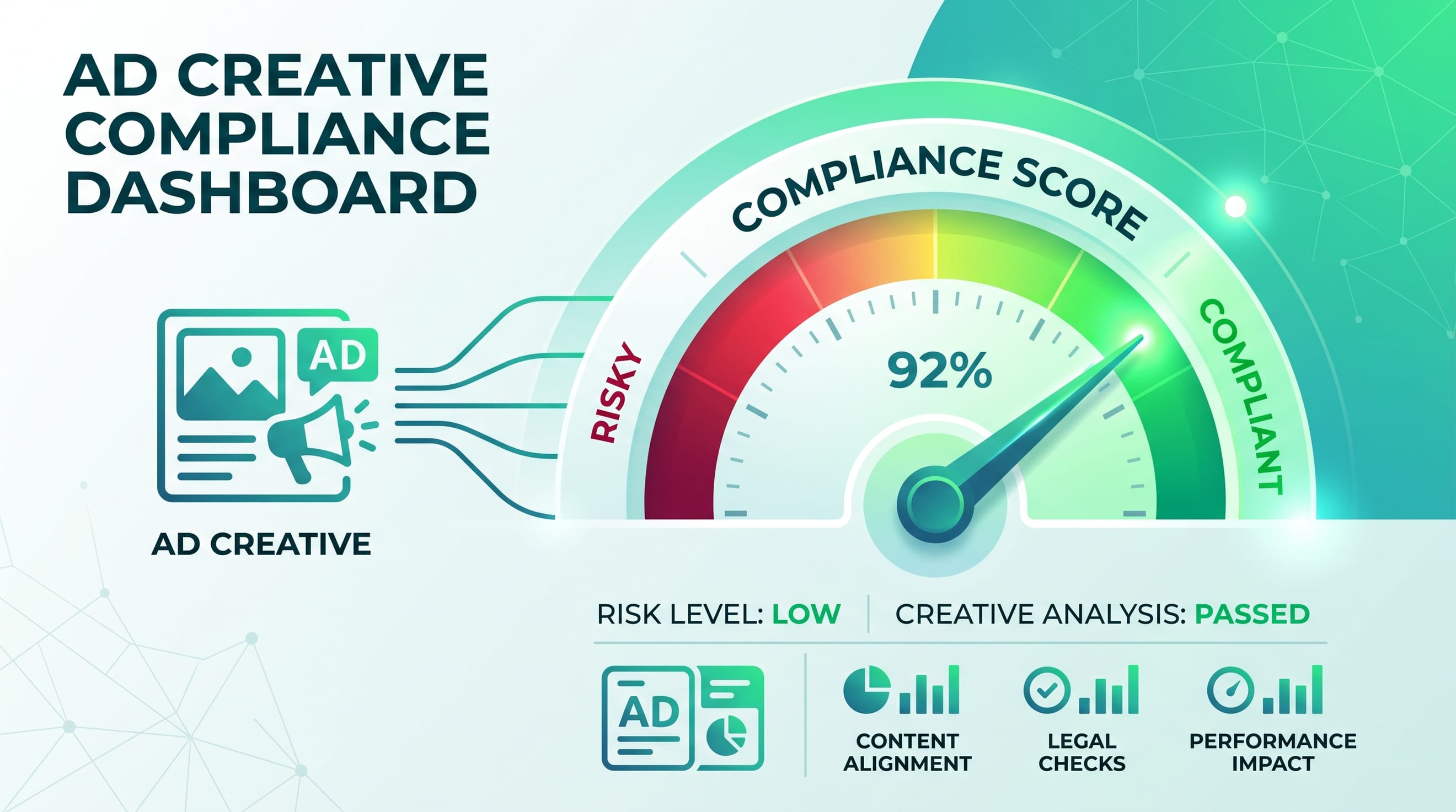
Let’s talk about what the numbers actually mean. When you receive a compliance risk score, it’s usually categorized into three tiers. Understanding these tiers helps your team prioritize their edits and decide which risks are worth taking.
- 90-100 (Green): Low risk. Your ad follows all known platform guidelines and regulatory requirements. It is highly likely to be approved within minutes.
- 70-89 (Yellow): Moderate risk. There are "gray area" elements—perhaps a bold claim that needs a disclaimer or a visual that is borderline. Proceed with caution and consider a manual tweak.
- Below 70 (Red): High risk. The ad contains clear violations. Submitting this could result in an immediate rejection or, worse, a strike against your ad account.
Data suggests that ads in the "Yellow" zone have a 50/50 chance of being flagged by a human moderator, even if they pass the initial bot scan. By aiming for a "Green" score every time, you essentially "whitelist" your own content through sheer quality control. How much more confident would your team feel if every asset came with a verified safety rating?
Integrating Pre-submission Ad Scoring into Your Workflow
Knowing your score is one thing; acting on it is another. To make ad compliance scoring effective, it needs to be baked into your creative workflow, not tacked on as an afterthought. The best time to score an ad is during the "Mockup" phase, long before the media buyer ever sees it.
Here is a simple 3-step workflow for integration:
- The Creative Draft: Designers and copywriters create the initial assets based on the campaign brief.
- The AI Scan: The assets are run through an automated tool to generate an ad creative compliance rating.
- The Optimization Loop: If the score is below your threshold, the tool provides specific feedback (e.g., "Change 'lose weight' to 'manage your wellness journey'"). The team makes the edits and re-scans until the score is "Green."
Companies that adopt this "Compliance-First" design approach see a 30% increase in creative output because they spend less time on revisions and more time on high-performing concepts. It turns compliance from a "no" department into an "enablement" department.
Moving from "Safe" to "High-Performing"
A common misconception is that "compliant" ads are boring. Many marketers fear that by following all the rules, they lose the "edge" that drives conversions. However, the opposite is often true. When you know exactly where the boundary is, you can dance right along it without falling over.
A high compliance risk score doesn't mean your ad has to be bland; it means your ad is smart. It uses clever framing and compliant language to deliver the same emotional punch without the regulatory headache. For example, instead of saying "We will save you $500," which is a hard-to-prove claim, a compliant ad might say "Our users save an average of $500," which is a data-backed statement.
In fact, ads that prioritize clarity and transparency—key markers of compliance—often see a 15% higher CTR because they build more trust with the audience. People are naturally skeptical of "miracle" claims. A compliant, high-scoring ad feels more professional and trustworthy. Isn't trust the ultimate goal of your brand anyway?
Your Roadmap to Stress-Free Submissions
The landscape of digital advertising is only getting more complex. With the rise of AI-generated content and increasing scrutiny from global regulators, the "submit and pray" method is no longer viable. Implementing a system for ad compliance scoring is the only way to protect your ad accounts while maintaining the speed your business demands.
By focusing on objective ratings, platform-specific nuances, and integrated workflows, you can turn compliance from a bottleneck into a competitive advantage. You’ll launch faster, scale more confidently, and sleep better at night knowing your accounts are safe.
If you’re tired of the "disapproved" notifications and the endless back-and-forth with legal, it might be time to look at a more intelligent solution. At Hawtads, we’ve built an AI-powered platform specifically designed to give you that pre-submission ad scoring you need. Our system analyzes your creative against thousands of platform policies and industry regulations in seconds, giving you a clear, actionable compliance risk score before you ever hit submit.
Ready to see how your current creatives rate? Take the guesswork out of your next campaign and start scoring your way to better performance. Your ad account—and your sanity—will thank you.