Gambling Ad Compliance 2026: Navigating the Global Patchwork of Regulations
Gambling Ad Compliance 2026: Navigating the Global Patchwork of Regulations Imagine this: You’ve just launched a multi-million dollar campaign across three continents. The creatives are stunning, the CTR is through the roof, and your acquisition costs are hitting record lows. Then, at 3:00 AM, yo
Gambling Ad Compliance 2026: Navigating the Global Patchwork of Regulations
Imagine this: You’ve just launched a multi-million dollar campaign across three continents. The creatives are stunning, the CTR is through the roof, and your acquisition costs are hitting record lows. Then, at 3:00 AM, your phone buzzes. It’s a notification from a regulator in a mid-sized European market. Your ad failed to include a specific font size for a mandatory warning, and now your license in that jurisdiction is under review. This isn't just a bad dream; it’s the reality of gambling advertising compliance 2026.
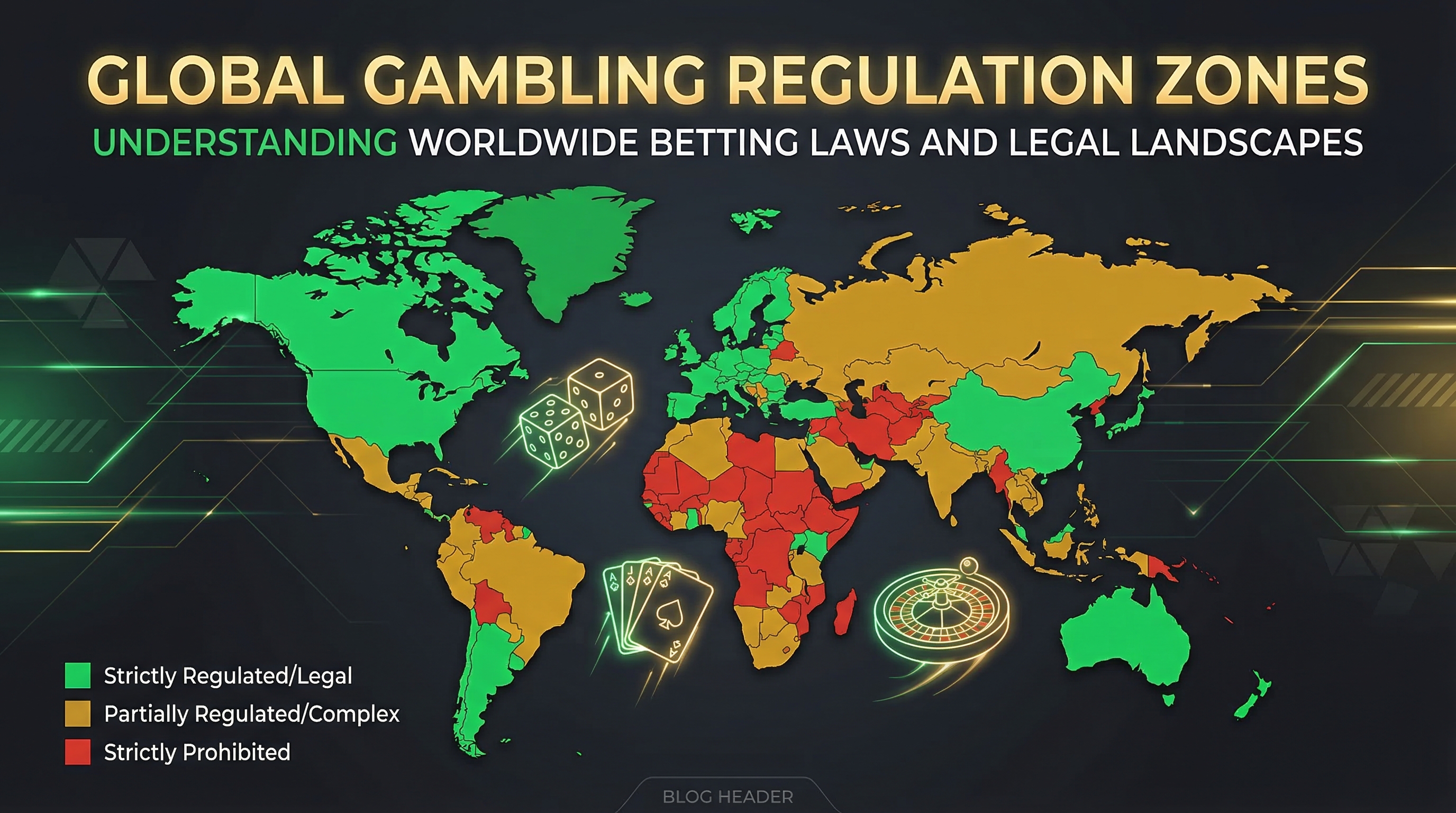
The landscape of igaming ad regulations has shifted from a "gentleman’s agreement" of voluntary codes to a high-stakes digital minefield. As we move deeper into 2026, the "patchwork" of global rules has become more intricate, with every country—and in the US, every state—writing its own playbook. If you feel like you’re playing a game of Whac-A-Mole with compliance updates, you’re not alone. But here’s the good news: while the rules are getting tougher, the tools to manage them are getting smarter.
In this guide, we’re going to walk through the current state of sports betting advertising rules and broader gambling ad restrictions. We’ll look at why "good enough" is no longer a viable strategy and how you can stay ahead of the curve without stifling your creative team’s spark.
The Death of the "One-Size-Fits-All" Creative
Gone are the days when you could produce a single hero asset, translate the copy, and blast it across the globe. By 2026, the divergence in regional requirements has reached a boiling point. What flies in New Jersey might get you banned in the Netherlands, and what’s considered "standard practice" in the UK could result in an eight-figure fine in Australia.
According to recent industry data, regulatory bodies worldwide issued over $450 million in advertising-related fines in the previous calendar year alone. This represents a 30% increase from two years prior, signaling a shift toward aggressive enforcement rather than simple warnings. Regulators are no longer just looking at what you say; they are scrutinizing how you say it, who sees it, and even the "vibe" of the imagery used.
Are your creatives designed to appeal to minors? Even if you think the answer is no, a regulator might disagree based on the color palette or the presence of a "cartoon-like" font. This subjectivity is the biggest challenge facing marketing teams today. You need a way to bridge the gap between creative intent and regulatory interpretation.
The European Fortress: Heightened Restrictions
Europe remains the most complex region for gambling advertising compliance 2026. The trend here is clear: total or near-total bans on untargeted advertising. In markets like the Netherlands and Belgium, the "wild west" era of billboards and daytime TV spots is officially over. Advertisers are now required to prove, with data, that their ads are only reaching an adult audience with a demonstrated interest in gambling.
In the UK, the Committee of Advertising Practice (CAP) has doubled down on its "strong appeal" rule. This means any athlete, celebrity, or influencer who has a significant following among under-18s is effectively banned from appearing in your ads. If you’re using a Premier League star in your creative, you better have a mountain of demographic data to prove their audience is overwhelmingly adult.
- The Netherlands: Mandatory 95% "reach" threshold, meaning you must prove 95% of your audience is 24+ for certain ad types.
- Germany: Strict "social concept" requirements where ads must emphasize the risk of addiction as much as the potential for winning.
- Italy: A continued near-total ban on gambling promotion, forcing operators to get "creative" with news-based portals—a tactic regulators are now closing in on.
Recent statistics show that 68% of European operators have reduced their total ad spend in favor of hyper-targeted, high-compliance digital channels. The focus has shifted from "how many people can we reach?" to "how many right people can we reach without breaking a law?"
The US Paradox: Growth Meets Governance
While Europe is tightening the screws, the United States is in a state of chaotic evolution. As more states legalize sports betting and iGaming, we’re seeing a reactionary wave of sports betting advertising rules. The initial "gold rush" phase, characterized by aggressive "risk-free" bet offers, has been replaced by a much more sober regulatory environment.
The term "risk-free" is now virtually banned across the US. Regulators correctly pointed out that if a user has to lose their own money to get a credit, it’s not "risk-free." This has forced a massive pivot in copywriting. Now, teams have to explain complex "bonus bet" mechanics in limited character counts while still making the offer sound enticing. It’s a linguistic tightrope walk.
In 2026, we’re seeing a push for a federal standard for gambling ads, though it remains a state-by-state battle for now. A striking 42% of US sports bettors reported feeling "oversaturated" by gambling ads in a recent survey, leading states like Ohio and Massachusetts to implement strict "volume" controls and "responsible gaming" (RG) messaging mandates that must occupy at least 10% of the ad's visual real estate.
The Influencer Problem: Authenticity vs. Accountability
Influencer marketing was once the "loophole" for igaming ad regulations. Because it felt like organic content, it often slipped under the radar. Not anymore. In 2026, influencers are treated exactly like traditional media outlets. If an influencer fails to include the correct disclosure or if they have a significant minor following, the operator—not just the influencer—is held liable.
How do you police a live streamer who might say something off-script during a five-hour broadcast? Or an affiliate who uses an outdated logo? The manual effort required to monitor these channels is staggering. You’re not just responsible for your own accounts; you’re responsible for the entire ecosystem that carries your brand name.
Statistic to note: Regulators in the UK and Australia have increased their "mystery shopping" and automated monitoring of social media by 200% since 2024. They are using AI to scan for non-compliant content, which means you need AI to catch it first.
The Role of AI in Gambling Ad Compliance 2026
It’s ironic: AI is making it easier to create thousands of ad variations, but it’s also making it impossible for human compliance teams to keep up. If your creative team is pumping out 500 variations of a banner ad for a weekend of NFL games, how can a single compliance officer realistically check every one of them for the correct state-specific disclaimer, the right "18+" logo, and the proper RG hotline number?
They can't. Not without burning out or letting something slip through the cracks. This is where the industry is moving toward "Compliance by Design." Instead of checking for errors after the ad is made, gambling ad restrictions are being baked into the production process itself.
By using platforms like Hawtads, operators are automating the tedious parts of the workflow. Imagine a system that automatically overlays the correct legal footer based on the state the ad is serving in, or one that flags a creative because the "Responsible Gambling" text is 2 pixels too small. This isn't just a time-saver; it's an insurance policy for your brand.
The Hidden Cost of Non-Compliance
When we talk about gambling advertising compliance 2026, we often focus on the fines. But the financial penalty is often the least of your worries. The real damage is three-fold:
- Operational Friction: Every time an ad is flagged, your campaign stops. Your bidding algorithms lose momentum, and your CAC spikes.
- Brand Erosion: Consumers are becoming more sensitive to "predatory" advertising. Being publicly shamed by a regulator for targeting vulnerable populations is a PR nightmare that takes years to fix.
- License Jeopardy: In the current climate, regulators are less likely to give "second chances." Repeated compliance failures are now being used as grounds for revoking operating licenses entirely.
A recent industry report found that the "hidden costs" of a single compliance breach—including legal fees, lost revenue during pauses, and brand recovery—can be 5x the cost of the actual fine. Can your margins really afford that?
Navigating Technical Requirements: The Devil in the Details
Let’s get granular for a second. Compliance in 2026 isn't just about the words you use; it’s about the technical specifications of the digital asset. We are seeing increasingly specific rules regarding:
- Contrast Ratios: Legal disclaimers must meet specific WCAG-style contrast ratios to ensure they are readable.
- Animation Speed: In some jurisdictions, the "terms and conditions" must remain on screen for a minimum number of seconds, or the scrolling speed must be slow enough for an average reader to follow.
- Audio Cues: Radio and podcast ads are now being scrutinized for the speed at which the "fine print" is read. The "fast-talking lawyer" trope is officially a regulatory red flag.
How do you manage these igaming ad regulations across a team of 50 designers? You need a "Single Source of Truth." A centralized library where only pre-approved, compliant components are used to build ads. If the legal team updates the disclaimer for Ontario, it should automatically update across every live and pending creative in your system.
The Shift from Reactive to Proactive Compliance
Most companies are reactive. They wait for a "Please Explain" letter from a regulator before they change their process. But in 2026, the winners are the proactive ones. They are the ones who view compliance as a competitive advantage rather than a hurdle.
When you have a robust, automated compliance process, you can move faster. You can launch in new markets in days instead of months because you know your "compliance engine" can handle the local sports betting advertising rules. You can experiment with new creative formats because you have a safety net that catches errors before they go live.
Think about it: if your competitor is stuck in a three-week legal review cycle for every new banner, and you can approve yours in three minutes with AI-assisted checks, who is going to win the "in-play" betting market? Speed is everything in this industry, but speed without safety is just a fast way to get shut down.
Data Privacy: The New Frontier of Ad Compliance
We can't talk about gambling advertising compliance 2026 without mentioning data privacy. With the death of the third-party cookie and the rise of stringent laws like the GDPR and various US state privacy acts, how you target is just as regulated as what you show.
Regulators are now looking for "dark patterns" in ad tech. Are you using data to specifically target people who have shown signs of problem gambling? Are you making it too difficult for users to opt-out of gambling-related ads? In 2026, "Responsible Marketing" includes your data pipeline. You must be able to audit your targeting parameters as easily as you audit your ad copy.
Stat: 55% of global regulators have stated they will prioritize "algorithmic transparency" in gambling advertisements over the next 24 months. This means you need to be able to explain why an ad was shown to a specific person.
The Actionable Takeaway: Audit, Automate, Adapt
So, how do you survive and thrive in this global patchwork? It comes down to three steps:
- Audit: Look at your current workflow. Where are the bottlenecks? Where did the last "near miss" happen? Usually, it’s in the handoff between creative and legal.
- Automate: Stop asking humans to do what machines do better. Use AI to scan for logos, check font sizes, and verify disclaimers. This frees your human experts to focus on high-level strategy and nuance.
- Adapt: Build a culture where compliance is part of the creative brief, not an afterthought. When designers understand the "why" behind the rules, they build better assets from the start.
The complexity of gambling ad restrictions isn't going away. If anything, the patchwork will only get more colorful. The question is: are you going to keep trying to sew it together by hand, or are you going to use a modern loom?
Future-Proofing Your Ad Strategy with Hawtads
At Hawtads, we live and breathe the intersection of high-performance creative and iron-clad compliance. We know that in the fast-paced world of iGaming and sports betting, you don't have time to manually check every pixel. That’s why we’ve built an AI-powered platform specifically designed to handle the gambling advertising compliance 2026 landscape.
Our tools help you automate the creative QA process, ensuring that every ad you ship meets the specific igaming ad regulations of your target market—instantly. From localizing disclaimers to detecting restricted imagery, we provide the guardrails your team needs to move fast without breaking things (or laws).
Don’t let a "patchwork" of regulations tear your marketing strategy apart. Let’s talk about how you can turn compliance from a cost center into a growth engine. Explore how automation can save your team hours of manual work and protect your most valuable asset: your license.
Ready to see it in action? Visit Hawtads today and discover how we’re helping the world’s leading regulated brands navigate the future of advertising.