Pharma DTC Advertising Under FDA's New Enforcement Push: What's Changed
Meta Description: Stay ahead of pharma DTC advertising FDA 2026 regulations. Learn how new FDA enforcement impacts your drug ad compliance and how to adapt your strategy. Imagine this: You’ve spent six months, four focus groups, and a significant portion of your annual budget on a high-production T
Meta Description: Stay ahead of pharma DTC advertising FDA 2026 regulations. Learn how new FDA enforcement impacts your drug ad compliance and how to adapt your strategy.
Imagine this: You’ve spent six months, four focus groups, and a significant portion of your annual budget on a high-production TV spot for your brand’s flagship medication. The creative is stunning, the patient testimonials are moving, and the "hero shots" are perfect. Then, a few weeks after the launch, a letter arrives from the FDA’s Office of Prescription Drug Promotion (OPDP).
It isn’t a fan letter. It’s a Notice of Violation. The reason? The background music during the risk disclosure was deemed "too upbeat," potentially distracting viewers from the side effects.
If that sounds like a nightmare, you aren't alone. We are currently entering a new era of pharma DTC advertising FDA 2026 standards that are fundamentally changing how drug companies communicate with patients. The "wild west" of digital health claims is being fenced in, and the FDA is sharpening its enforcement tools.
What exactly has changed, and how can you ensure your creative pipeline stays ahead of the curve? Let’s grab a coffee and break down the new reality of DTC ad compliance.
The "Clear, Conspicuous, and Neutral" Mandate
The biggest shift in pharma advertising regulations centers on a concept the FDA calls "Clear, Conspicuous, and Neutral." While the agency has always required a "fair balance" between benefits and risks, the new Final Rule (88 FR 80958) raises the bar for how that balance is presented.
It’s no longer enough to just list the side effects. The FDA now mandates that the "Major Statement" (the part where you talk about risks) must be presented in a way that doesn’t minimize its importance. This means no more "fast-talking" announcers or distracting visuals while the scary stuff is being read.
Why the sudden push? According to FDA research, nearly 54% of consumers reported finding it difficult to recall side effects from TV ads when the background visuals were highly engaging or distracting. The agency is determined to close that gap.
Does your current creative process account for "visual neutrality"? If your risk statement is scrolling over a scene of a family playing in a sun-drenched park, you might already be in the crosshairs of FDA drug advertising enforcement.
The Countdown to 2026: Why the Timeline Matters
You might be wondering why everyone is talking about pharma DTC advertising FDA 2026. While the Final Rule was officially published recently, the industry is currently in a critical transition period. The FDA has provided a window for companies to bring their legacy creative into compliance, but that window is closing fast.
By 2026, the grace period for "business as usual" will be a thing of the past. The FDA is expected to ramp up its monitoring of not just TV and radio, but the vast, fragmented world of digital and social media advertising. This isn't just about new ads; it’s about auditing your entire active library.
The stakes are higher than ever. In 2023, the OPDP issued several high-profile letters, but industry analysts predict a 30% increase in enforcement actions as we approach the 2026 full-compliance deadline. The agency is moving from "education" to "enforcement."
Are you prepared to re-edit or pull down millions of dollars worth of assets? Waiting until the end of 2025 to start your compliance audit is a recipe for a budget disaster.
The Death of the "Fast-Talker" and Audio Distractions
We’ve all heard the ads where the benefits are read by a soothing, melodic voice, followed by a 15-second "speed-read" of side effects that sounds like a tobacco auctioneer. Those days are officially over. The new DTC ad compliance standards specifically target audio presentation.
The FDA now requires that the audio information in the Major Statement be "at least as understandable" as the rest of the ad. This includes volume, articulation, and pacing. If your announcer’s pitch shifts significantly when they start talking about nausea or dizziness, it’s a red flag.
A recent study published in the Journal of Public Policy & Marketing found that upbeat background music can decrease a viewer’s perception of risk by as much as 20%. The FDA has read this data, and they are using it to justify stricter oversight of sound engineering in pharma ads.
How does your audio stack up? Have you tested the decibel levels of your background track against the voiceover? These are the granular details that now determine whether an ad is compliant or a liability.
The Social Media Minefield: Influencers and Short-Form Video
If you think pharma advertising regulations only apply to 60-second TV spots, think again. The FDA is increasingly focused on the digital frontier—specifically TikTok, Instagram, and "patient influencers." This is where many brands are currently most at risk.
The challenge with short-form video is the "one-click" rule. For years, marketers thought they could post a benefit claim and link to the "Important Safety Information" (ISI) in the bio or a comment. The FDA has made it clear: if the claim is in the video, the most important risks must be in the video, too.
Consider this: 1 in 3 Gen Z consumers now use social media platforms like TikTok to search for health information before consulting a doctor. The FDA knows this, and they are monitoring hashtags and influencer partnerships with unprecedented scrutiny.
Can your influencers explain the "fair balance" of your drug in a 15-second Reel? If not, you’re playing a dangerous game with FDA drug advertising enforcement. The agency doesn't care if the platform’s format makes compliance difficult; they care that the consumer is informed.
Visual Overlays and the "Dual Modality" Requirement
One of the more technical aspects of the new pharma DTC advertising FDA 2026 push is the requirement for "dual modality." This means that risk information must be presented in both the audio and the visual (on-screen text) simultaneously.
But here’s the kicker: the on-screen text can’t just be a tiny "fine print" crawl at the bottom of the screen. It must be placed against a contrasting background, be of a sufficient size, and stay on screen long enough for the average viewer to read it.
The FDA’s own testing showed that when risk information is presented in both audio and text simultaneously, consumer comprehension increases by over 40%. This is the new gold standard for DTC ad compliance.
Is your creative team still trying to hide the ISI in the lower third? It’s time to rethink the layout. Contrast, font size, and duration are no longer creative choices—they are legal requirements.
The "Bad Ad" Program and the Power of the Public
It isn't just the FDA’s internal team you have to worry about. The "Bad Ad" program encourages healthcare providers (HCPs) and even consumers to report misleading drug advertising directly to the agency. In an era of social media activism, every viewer is a potential whistleblower.
This "crowdsourced enforcement" has been highly effective. Since its inception, the Bad Ad program has led to numerous investigations that began with a single complaint from a doctor who felt an ad's benefits were overstated compared to its risks.
Statistics show that the FDA receives hundreds of reports through the Bad Ad program annually. This means your pharma advertising regulations strategy must be airtight, as even a small oversight can be amplified by a single disgruntled viewer or a skeptical physician.
How would your current digital campaign hold up if a competitor or a skeptical HCP reported it today? Compliance isn’t just about the FDA; it’s about maintaining trust with the entire medical community.
The High Cost of Being Wrong
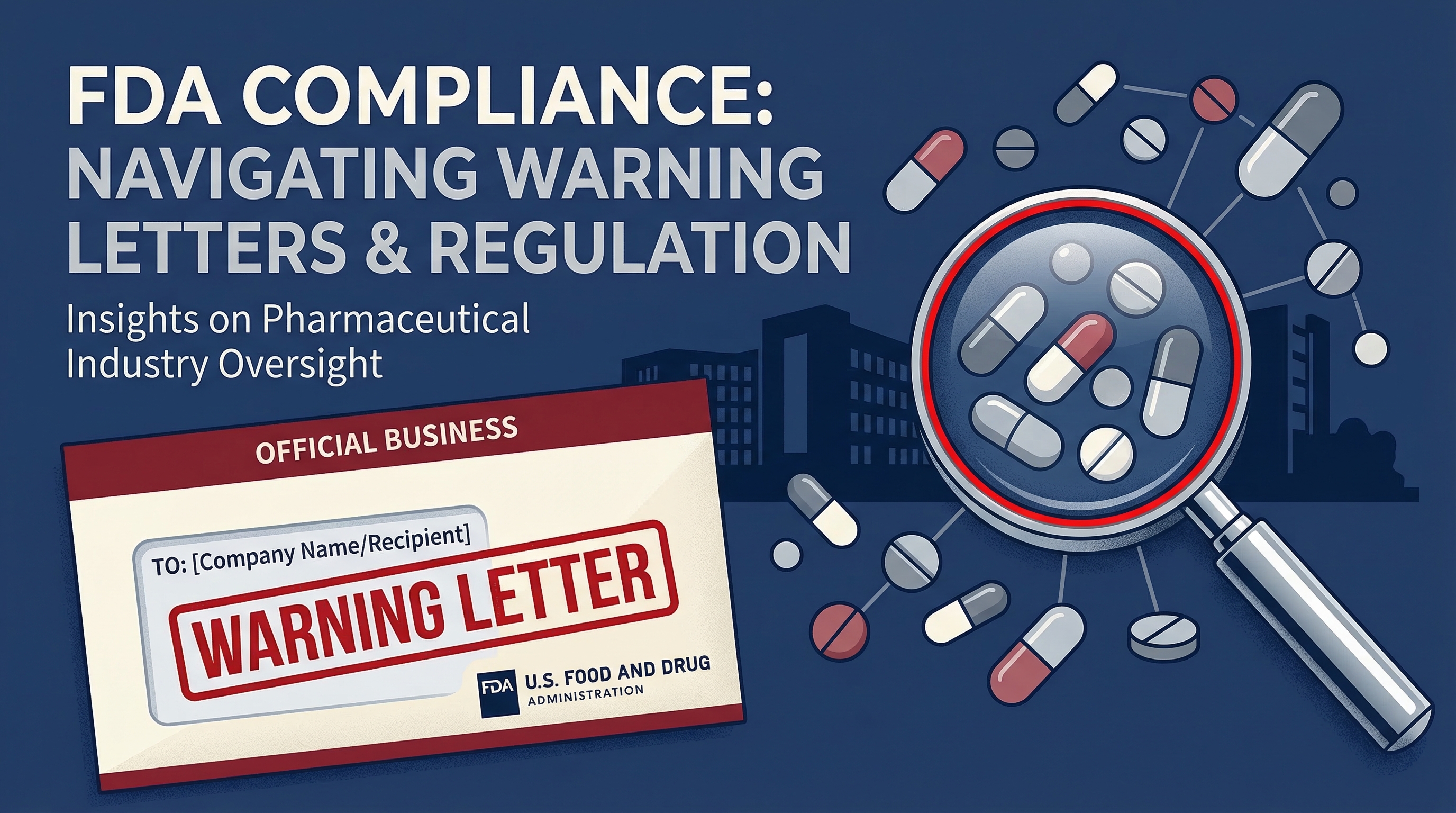
The financial implications of FDA drug advertising enforcement are staggering. Beyond the immediate cost of pulling and re-shooting creative, there are the long-term impacts on brand equity and stock price. For a publicly traded pharmaceutical company, a Warning Letter can be devastating.
Market data suggests that a single FDA Warning Letter regarding promotional materials can lead to a 1% to 3% drop in stock price in the days following the announcement. When you're a multi-billion dollar firm, that's a lot of market cap to lose over a non-compliant Instagram post.
Then there are the legal fees and the potential for "Corporate Integrity Agreements" (CIAs) that can put your entire marketing department under federal monitors for years. The "cost of compliance" is high, but the "cost of non-compliance" is astronomical.
Can you afford to take the risk? In the pharma DTC advertising FDA 2026 landscape, the most expensive ad is the one that gets banned.
Leveraging AI for Compliance Automation
So, how do you manage thousands of assets across dozens of platforms while staying 100% compliant? Doing it manually is no longer a viable option. The volume of digital content is simply too high, and the risk of human error is too great.
This is where the industry is turning to AI-powered solutions. By using automated compliance tools, brands can scan every frame of a video, every line of a script, and every pixel of a social media ad to ensure it meets the latest pharma advertising regulations.
Imagine a tool that automatically flags if your background music is too loud or if your on-screen text doesn't have enough contrast. At Hawtads, we’ve seen that companies using AI-driven compliance checks can reduce their regulatory review time by up to 60% while significantly lowering the risk of a Notice of Violation.
Why leave your DTC ad compliance to chance? In a world where the FDA is using data and research to catch violations, you should be using technology to prevent them.
Actionable Takeaways for Your Team
The road to pharma DTC advertising FDA 2026 compliance doesn't have to be a stressful one if you start moving now. Here is a quick checklist to keep your team on track:
- Audit Your Library: Review all active TV, radio, and digital assets against the "Clear, Conspicuous, and Neutral" standard.
- Update Your Style Guide: Standardize font sizes, background contrast, and audio levels for all risk disclosures.
- Train Your Influencers: Ensure every partner understands that risk information is not optional and cannot be hidden behind a "click."
- Implement Dual Modality: Make it a rule that risk info must always be seen AND heard simultaneously.
- Automate the Process: Use tools like Hawtads to catch errors before they reach the FDA.
The enforcement landscape is changing, but your goal remains the same: communicating the value of your treatments to the patients who need them. By embracing these new standards, you aren't just avoiding fines—you’re building deeper trust with your audience.
The Future of Compliant Creativity
As we move toward 2026, the brands that win won't be the ones that try to "skirt" the rules. They will be the ones that find a way to make compliance a part of their creative DNA. The FDA’s push for clarity is actually an opportunity to communicate more effectively with patients who are often overwhelmed by complex medical information.
If you’re feeling overwhelmed by the shifting sands of FDA drug advertising enforcement, you don’t have to navigate it alone. Transitioning to a more automated, tech-forward approach can take the guesswork out of your creative pipeline.
At Hawtads, we specialize in helping regulated brands navigate these exact challenges. Our AI-powered platform is designed to ensure your ads are as compliant as they are compelling, giving your team the freedom to focus on great storytelling while we handle the regulatory heavy lifting. Curious how it works? We’d love to show you how we’re helping pharma leaders stay ahead of the 2026 curve.