The Hidden Cost of Ad Rejections: How Regulated Brands Lose $47K Monthly
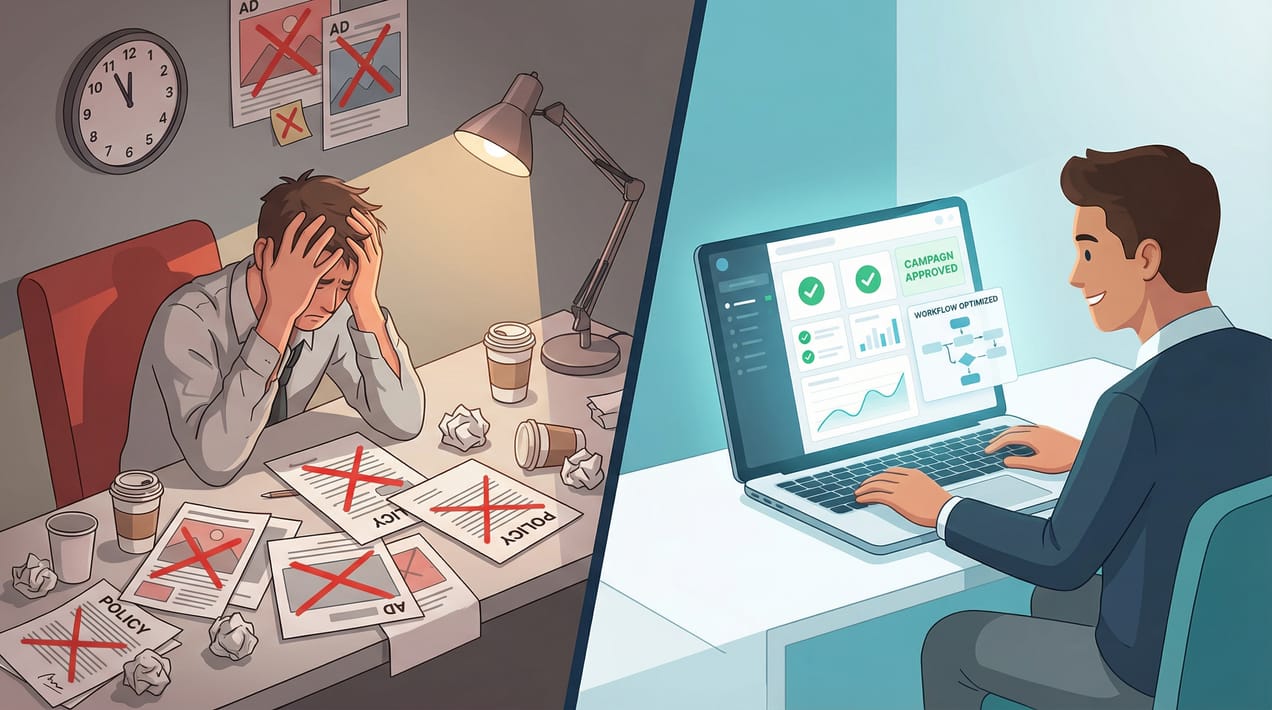
You’ve spent weeks perfecting the campaign. The copy is punchy, the visuals are stunning, and your targeting is surgical. You hit "Publish" and head home, expecting to see a flood of conversions by morning. Instead, you wake up to a sea of red notifications: Ad Rejected. For most marketers, this
You’ve spent weeks perfecting the campaign. The copy is punchy, the visuals are stunning, and your targeting is surgical. You hit "Publish" and head home, expecting to see a flood of conversions by morning. Instead, you wake up to a sea of red notifications: Ad Rejected.
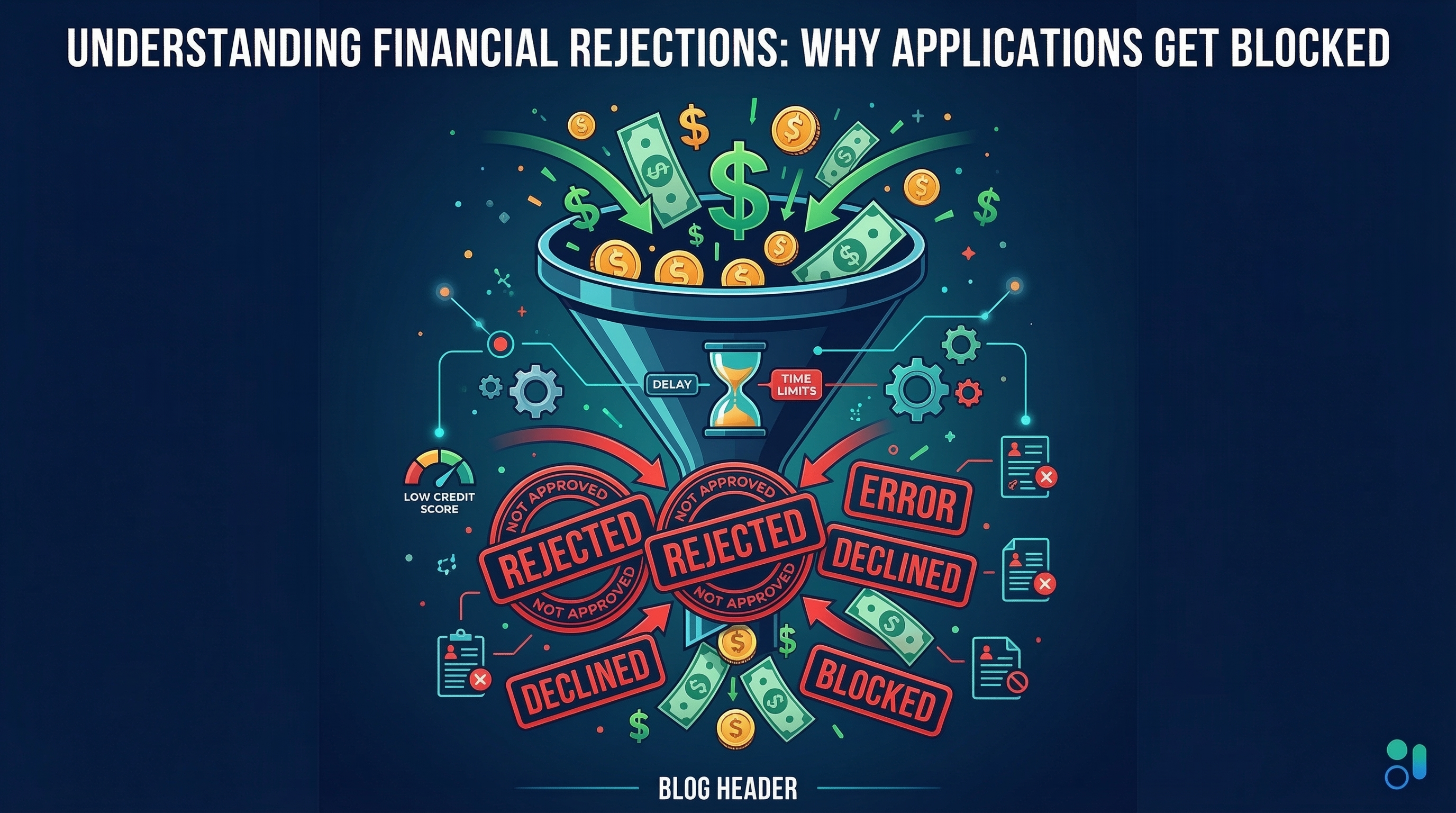
For most marketers, this is a frustrating Tuesday. But for brands in regulated industries—like fintech, healthcare, or supplements—this isn’t just an annoyance. It’s a massive, silent leak in your balance sheet. When we talk about the cost of ad rejections, we aren't just talking about the time it takes to change a word and resubmit.
According to internal industry benchmarks, the average mid-sized brand in a regulated space loses approximately $47,000 every single month due to creative non-compliance and the resulting delays. Have you ever stopped to calculate how much those "Rejected" tags are actually costing your bottom line? Let’s pull back the curtain on the math of missed opportunities.
The Hidden Math of the $47,000 Monthly Loss
Where does that $47,000 figure come from? It’s rarely a single line item on an invoice. Instead, it’s a "death by a thousand cuts" scenario involving labor, opportunity cost, and platform penalties.
Consider the workflow: A creative is flagged. Your media buyer spends two hours diagnosing the issue. They send it back to the designer (another hour). The designer tweaks it and sends it to the compliance officer (thirty minutes). The compliance officer reviews it, finds another potential risk, and the cycle repeats. By the time that ad is live, you’ve burned $1,500 in specialized labor costs alone.
Industry data suggests that brands in high-risk categories see an average rejection rate of 15-20%. When you factor in the advertising ROI loss from the days those ads were dark, the numbers escalate rapidly. If your daily revenue goal is $10,000 and your ads are down for three days of back-and-forth, that’s $30,000 in vanished top-line revenue before you even count the salaries.
The "Compliance Tax" on Creative Teams
Your creative team should be focused on one thing: making ads that convert. But in regulated industries, they often spend 40% of their time acting as amateur paralegals. They are constantly second-guessing whether a specific font size for a disclaimer is "clear and conspicuous" or if a certain health claim will trigger an automated ban.
This "compliance fatigue" leads to safer, boring ads. When your team is afraid of rejection, they stop innovating. They stick to the "safe" templates that haven't been flagged before, even if those templates are seeing massive creative fatigue and declining CTRs. This stagnation is a significant part of the cost of ad rejections—you aren't just losing money on the ads that fail; you’re losing money on the better ads that were never made.
A recent study found that creative teams in highly regulated sectors are 35% less productive than their counterparts in general e-commerce. Are you paying your top-tier designers to innovate, or are you paying them to navigate Meta’s ever-changing policy labyrinth?
The Ghost in the Machine: Platform Trust Scores
Do you ever feel like the platforms have a personal grudge against your account? It might not be your imagination. Facebook (Meta), Google, and TikTok all maintain internal "Trust Scores" or "Account Health" metrics for every advertiser.
Every time you have rejected ad creatives, a small mark is made against your account. It’s like a credit score for marketers. When your rejection rate stays high, the platforms view your account as "high risk." This doesn't just lead to more rejections; it leads to higher CPMs (Cost Per Mille). The algorithm essentially charges you a "risk premium" to show your ads to its users.
Data indicates that accounts with poor compliance history can pay up to 25% more in CPMs than accounts with a clean record. On a $100,000 monthly spend, that’s an extra $25,000 gone—not because your ads aren't good, but because the platform doesn't trust you. How much could you scale if your CPMs suddenly dropped by a quarter?
The Spiral of the "Shadow Ban"
It gets worse. High rejection rates can lead to "shadow" penalties where your ads are technically "Active" but the algorithm refuses to give them any significant reach. You see your spend hovering at $5 a day when you’ve set a $500 budget. You’re stuck in a loop of testing and failing, all while your competitors—who have mastered compliance—are cleaning up.
This is where HawtAds steps in. By catching these violations before they ever hit the platform's servers, you maintain a pristine account health score. You aren't just avoiding a rejection; you’re protecting your relationship with the algorithm that controls your growth.
Opportunity Cost: The Price of Being "Dark"
In digital advertising, timing is everything. If you’re launching a new supplement during the New Year "Resolution" rush or a new fintech app during tax season, every hour your ads are in "Review" or "Rejected" status is a disaster. The market doesn't wait for your compliance team to finish their coffee.
When an ad is rejected on a Friday afternoon, it often stays dark until Monday or Tuesday. That’s an entire weekend of peak consumer traffic lost. If your competitors are live and you aren't, you aren't just losing sales—you’re losing market share. The advertising ROI loss here is compounded because those customers you missed are now in your competitor's funnel, receiving their email sequences and retargeting ads.
Research shows that for every 24 hours an ad remains in a "Rejected" state, the eventual customer acquisition cost (CAC) for that campaign increases by an average of 7%. The momentum is gone, the "learning phase" for the algorithm is interrupted, and you’re essentially starting from zero.
The High Cost of Manual Review
Many brands try to solve this by throwing more people at the problem. They hire more compliance officers or pay their agencies higher retainers to "ensure" everything is compliant. But humans are fallible. They get tired, they miss things, and they don't always keep up with the daily updates to platform policies.
Relying on manual review is like using a paper map in the age of GPS. It’s slow, it’s prone to error, and it can’t react in real-time. The average manual compliance check takes 15 to 30 minutes per creative asset. If you’re testing 100 variations a month, that’s 50 hours of high-level salary time spent on a task that could—and should—be automated.
Why "Safe" Copy Isn't the Answer
A common reaction to the high ad compliance costs is to "neuter" the marketing. You remove all the bold claims, you tone down the benefits, and you make the ad as vanilla as possible to ensure it passes. But vanilla doesn't sell. In a crowded feed, "safe" is synonymous with "invisible."
The goal shouldn't be to avoid the line; it should be to dance right on the edge of it without overstepping. This requires precision. You need to know exactly which words are triggers and which are safe. For example, in the CBD industry, saying "treats anxiety" is a death sentence for an ad. But saying "supports a sense of calm" might be perfectly acceptable under current guidelines.
How do you find that balance without risking your account? You need data-driven insights. You need a system that has analyzed millions of successful (and unsuccessful) ads to tell you exactly where the boundary lies. This is the difference between a brand that survives and a brand that dominates.
The Regulatory Landscape is Moving Fast
Whether it’s the SEC tightening rules on crypto ads or the FTC cracking down on health influencers, the rules are changing faster than ever. In 2023 alone, Meta updated its advertising policies over 12 times. If your team isn't monitoring these changes daily, you are at risk. One "standard" phrase that was fine last month could be the reason your entire Business Manager gets disabled today.
The cost of ad rejections isn't just a financial metric; it's a risk management metric. A disabled account can take weeks or months to recover, and in some cases, it's gone forever. Can your business survive 30 days without any social media traffic?
The Solution: Moving from Reactive to Proactive
Most brands treat compliance as a hurdle at the end of the creative process. They finish the work, then check if it’s "legal." This is the most expensive way to operate. To eliminate the $47,000 monthly leak, you have to move compliance to the beginning and middle of your workflow.
Imagine if your designers knew an ad would be rejected *while* they were still in Figma or Canva. Imagine if your copywriters got a "red flag" alert the moment they typed a non-compliant claim. This is the power of AI-driven compliance automation. It turns a 3-day delay into a 3-second fix.
By using an automation platform, you achieve three things:
- Speed: You go from "Concept" to "Live" in hours, not days.
- Scale: You can test 10x more creatives because the bottleneck of manual review is gone.
- Safety: You protect your account health and lower your long-term CPMs.
The Real ROI of Compliance Automation
Let’s look at the numbers again. If you spend $500 a month on a tool like HawtAds and it saves you just one "Friday afternoon rejection" a month, it has already paid for itself ten times over. When you factor in the saved labor costs and the improved account trust, the ROI isn't just positive—it’s transformative.
Brands using AI-driven compliance tools report a 60% reduction in ad rejections within the first 90 days. That’s 60% less time spent on rework and 60% more time spent on strategy and growth. What could your team achieve with an extra 20 hours a week?
Actionable Takeaway: Audit Your Rejection Cost
Before you change your next campaign, I want you to do a quick audit of the last 30 days. It’s a simple three-step process to find your "Hidden Rejection Cost":
- Count the Rejections: How many unique ads were flagged?
- Estimate the Labor: Multiply that number by 3 (the average hours of total team time spent on a fix). Multiply those hours by your team's average hourly rate.
- Calculate the "Dark" Time: How many total hours were those ads offline while being fixed? Multiply that by your average hourly revenue from ads.
The number you see at the bottom of that page is the "tax" you are currently paying to the gods of manual compliance. It’s likely much higher than you realized. But here’s the good news: that "tax" is optional.
The most successful brands in regulated industries aren't the ones with the biggest legal teams; they are the ones with the smartest systems. They’ve realized that in the age of AI, manual ad review is a relic of the past. They are using technology to stay fast, stay compliant, and stay profitable.
If you're tired of seeing red notifications and want to start reclaiming that $47K (or more) every month, it might be time to look at how technology can handle the heavy lifting for you. After all, your team was hired to be creative—not to be policy police. Let them get back to what they do best, and let a system like HawtAds handle the rest. Your bottom line—and your sanity—will thank you.