
Why 73% of Ads in Regulated Industries Get Rejected (And How to Fix It)
The 11:00 PM Refresh: A Marketer’s Ghost Story
It’s 11:00 PM on a Tuesday. You’re on your third cup of lukewarm coffee, the blue light of your monitor is starting to make your eyes itch, and you’ve just hit "Refresh" for the twentieth time. You’re waiting for that green "Approved" checkmark on your new campaign. Instead, you get the dreaded red triangle: Ad Rejected.
Your heart sinks. You’ve spent three weeks on this creative. You’ve coordinated with the design team, argued with the copywriter over a single adjective, and finally got the budget signed off. Now, because of a vague "Policy Violation," your entire launch is dead in the water.
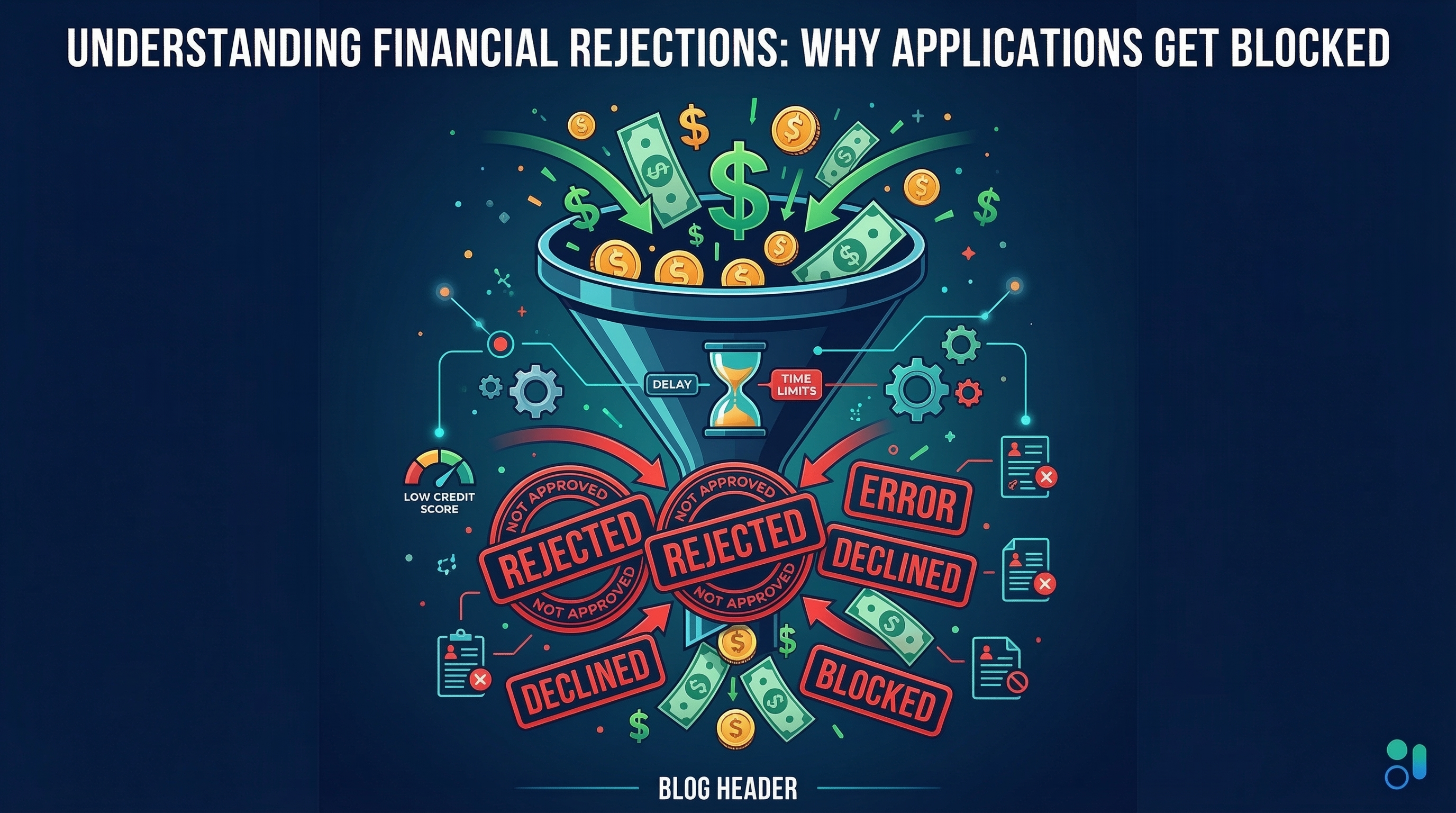
If this sounds familiar, you aren’t alone. In fact, you’re in the vast majority. According to Industry research from leading ad networks 2025, a staggering 73% of ads in regulated industries—think FinTech, Pharma, Real Estate, and Gaming—get rejected on their first submission.
Let’s be honest: navigating ad platform guidelines in 2025 feels less like marketing and more like walking through a minefield blindfolded. One wrong word, one slightly-too-prominent image, and the algorithm shuts you down. But why is the bar so high? And more importantly, how do you stop wasting your life in the "Pending Review" purgatory?
The Invisible Wall: Why Regulated Industries Have It Harder
The digital advertising landscape has changed. Gone are the days when you could "move fast and break things." Today, the major platforms—Meta, Google, LinkedIn, and TikTok—are under intense pressure from global regulators to protect users from predatory practices. The result? They’ve built massive, AI-driven gatekeepers that are programmed to be hyper-cautious.
For those of us in regulated sectors, this means we’re playing a different game than the local bakery or a D2C sock brand. Our ad rejection rates are inherently higher because the "risk" associated with our products is higher. If a sock ad is misleading, someone gets itchy feet. If a FinTech ad is misleading, someone loses their life savings.
Here’s the thing: the AI reviewing your ads doesn’t have "common sense." It doesn’t know you’re a legitimate business with a stellar reputation. It only knows what it's been trained to flag. To beat the machine, you have to understand the machine. Let’s break down the five most common reasons your ads are getting tossed into the rejection bin.
1. The "Guarantee" Trap: Misleading Claims and Hyperbole
We all want to promise results. It’s the core of marketing, right? But in regulated advertising, words like "guaranteed," "risk-free," or "instant" are the fastest way to get your account flagged.
Consider a FinTech company promoting a new high-yield savings account. The copywriter writes: "The only way to guarantee your financial future." BOOM. Rejected. Why? Because no financial product can legally guarantee a future outcome in the eyes of the ad network’s compliance bots.
Recent data shows that 28% of rejections in the financial sector are due to "absolute" language. The algorithm is looking for definitive claims that can’t be backed up by every single user's experience. You know what's frustrating? You’re trying to be confident, but the platform sees it as a policy violation.
The Fix: Shift from "What will happen" to "What is possible." Use words like "designed to," "potential," or "aims to." It feels less punchy, but a live ad that’s 10% less punchy is infinitely better than a "perfect" ad that never runs.
2. The Subtle Art of "Personal Attributes"
This is perhaps the sneakiest rejection reason of them all. Platforms like Meta have strict rules against implying you know something about the user’s personal attributes. This includes their race, religion, age, sexual orientation, or—most commonly in our world—their financial status or health condition.
Imagine you’re running ads for a debt consolidation service. You write: "Struggling with credit card debt? We can help." Sounds helpful, right? Rejected. By using the word "you" in relation to "debt," you are asserting that you know the user has debt. The platform considers this a violation of user privacy and a "negative user experience."
Did you know that ad rejection rates for personal attribute violations have risen 15% since 2023? The AI is getting better at spotting these linguistic nuances. It’s no longer just about avoiding slurs; it’s about avoiding the word "you" in the wrong context.
The Fix: Focus on the solution, not the person. Instead of "Are you tired of back pain?" try "New solutions for chronic back pain management." It removes the personal assumption while keeping the relevance. One-liner to remember: Speak to the problem, not the person’s identity.
3. Restricted Content and "Prohibited Substances" (Even the Legal Ones)
For those in the CBD, supplements, or pharmaceutical space, the struggle is real. Even if your product is 100% legal in your jurisdiction, the ad platforms often have a "global lowest common denominator" policy. If it’s banned in one major market, they make it difficult to advertise everywhere.
We recently saw a case where a wellness brand had an ad rejected because the background of the image featured a plant that looked vaguely like a hemp leaf. It wasn't. It was a common fern. But the AI doesn't do botany; it does pattern matching. If it looks like a prohibited substance, it is a prohibited substance.
Approximately 1 in 4 health-related ads fail due to "unproven medical claims" or "prohibited content" phrasing. This often happens because the copy mentions a specific disease or condition that the platform has restricted to "certified providers" only.
The Fix: Use "Compliance-First" imagery. Avoid any visuals that could be misinterpreted by a low-resolution scan. When it comes to copy, stick to "General Wellness" terms rather than "Medical Treatment" terms. It’s a fine line to walk, but it’s the only way to stay active.
4. The Missing Fine Print: Disclaimers and T&Cs
In the world of regulated advertising, your creative isn't just the image and the headline. It's the whole legal package. Many marketers forget that the "ad" includes the fine print that must be visible or easily accessible.
In Real Estate, for example, failing to include the Equal Housing Opportunity logo or your specific license number in the ad creative is a one-way ticket to Rejection City. Industry audits show that 60% of real estate ads miss at least one required local disclosure.
The conflict here is usually between the Creative Director and the Legal Team. The Creative Director wants a clean, beautiful aesthetic. Legal wants a wall of text. When you try to hide the legal text in a tiny, unreadable font to save the "vibe," the platform’s OCR (Optical Character Recognition) flags it as "unclear" or "deceptive."
The Fix: Treat your disclaimers as a design element, not an afterthought. Use compliance automation tools to ensure that every required element is present before you even hit upload. If the platform can't read your disclaimer, they assume it's not there.
5. The Landing Page Mismatch (The Bait-and-Switch Trap)
You’ve done it. You’ve written the perfect, compliant ad. The image is clean, the copy is vague but enticing, and the "you" language is nowhere to be found. You hit publish. Approved! You celebrate. Two hours later... Account Disabled.
What happened? The platform’s crawler finally made it to your landing page. Ad platform guidelines apply to the entire funnel, not just the creative. If your ad promises "Financial Tips" but your landing page is a hard-sell for a crypto-trading bot, you’ve triggered a "Circumventing Systems" violation.
Research indicates that 35% of policy violations in regulated sectors actually occur after the click. The algorithm checks for "Continuity of Experience." If the tone, offer, or legal disclosures on your landing page don't match the ad, you’re flagged as a high-risk advertiser.
The Fix: Ensure your landing page is as "boring" as your ad. That is to say, ensure it is equally compliant. Every claim on the page must be backed by the same level of evidence as the ad creative. Consistency isn't just good branding; it's a survival strategy.
The Hidden Tax: Why Rejections are Killing Your Bottom Line
Let’s step away from the technicalities for a moment and talk about your time. Because time, as they say, is the only thing we aren't making more of.
When an ad gets rejected, the cost isn't just the lost impressions. It's the "Compliance Tax." On average, marketing teams in regulated industries spend 40 hours per month on compliance reviews and fixing rejected ads. That’s a full work week every single month spent on administrative rework rather than actual growth strategy.
Think about your team’s hourly rate. Multiply that by 40. Now add the opportunity cost of the campaigns that *didn't* run during a peak sales window. We’re talking about tens of thousands of dollars in "Invisible Waste."
You know what’s frustrating? Most of this work is repetitive. You’re fixing the same "Personal Attribute" error for the tenth time. You’re manually adding the same disclaimer to 50 different image sizes. It’s soul-crushing work that burns out talented marketers.
Is this really the best use of your brainpower? Are you a marketer, or are you a paralegal with a Canva subscription?
"What If There Was a Better Way?"
We’ve established that the system is rigged against you. The ad platform guidelines are getting stricter, the AI gatekeepers are getting more aggressive, and the cost of failure is rising. You can’t just "guess" your way to compliance anymore.
But here’s the reality: the 27% of ads that *do* get approved are the ones that win the market. While their competitors are stuck in a loop of rejections and appeals, the compliant advertisers are scaling, gathering data, and winning customers. They aren't smarter than you; they just have a better system.
In the past, the only "system" was a very expensive legal team or a very stressed-out compliance officer who looked at every single image. That doesn't scale. In the age of AI, the solution to AI-driven rejections isn't "more humans." It’s "better AI."
What if you could know an ad would be rejected *before* you ever uploaded it? What if the software you used to create the ad actually understood the policy violations of Meta and Google as well as you understand your own brand?
Fixing the Friction with Hawtads
The 73% rejection rate isn't a failure of creativity; it's a failure of workflow. We’ve spent years watching brilliant campaigns die because of a single misplaced word. We saw the 40-hour-a-month drain and decided it had to stop.
At Hawtads, we built something different. Our AI-powered platform doesn't just generate flashy images or catchy headlines—it generates compliant ads. We’ve baked the complex, ever-changing rules of regulated industries directly into our neural networks.
When you use Hawtads, you aren't just automating your creative production. You are installing an "Insurance Policy" for your ad account. Our system flags potential issues in real-time, suggesting alternative phrasing and ensuring all necessary disclaimers are perfectly placed. We help you navigate the minefield so you can get back to what you actually love: growing your business.
Stop refreshing the page and hoping for a miracle. Stop letting the red triangle dictate your schedule. It's time to move from 73% rejected to 100% unstoppable.
At Hawtads, we built something different. Our AI doesn't just generate ads—it generates compliant ads. Learn more and book your demo today.
)