Gambling Advertising and Responsible Gaming: Building Ads That Protect Vulnerable Players
The Masterpiece That Got Banned: A Familiar Performance Marketing Story It was a masterpiece of pixel-perfect persuasion. Sarah, a senior media buyer at a growing performance agency, had spent three hours tweaking prompts in a generic AI image generator. She finally produced the perfect visual for h
The Masterpiece That Got Banned: A Familiar Performance Marketing Story
It was a masterpiece of pixel-perfect persuasion. Sarah, a senior media buyer at a growing performance agency, had spent three hours tweaking prompts in a generic AI image generator. She finally produced the perfect visual for her client’s new skincare line: a glowing, hyper-realistic model showing a flawless complexion, subtly split down the middle to imply a stunning transformation.
The client loved it. The creative director applauded it. Sarah confidently uploaded the asset into Meta Ads Manager, paired it with some punchy copy, and hit "Publish."
Two hours later, the notification arrived. Ad Rejected.
Worse, because the client’s account had a history of minor infractions, this latest rejection triggered an automatic account restriction. The campaign ground to a halt. Revenue paused. Panic ensued.
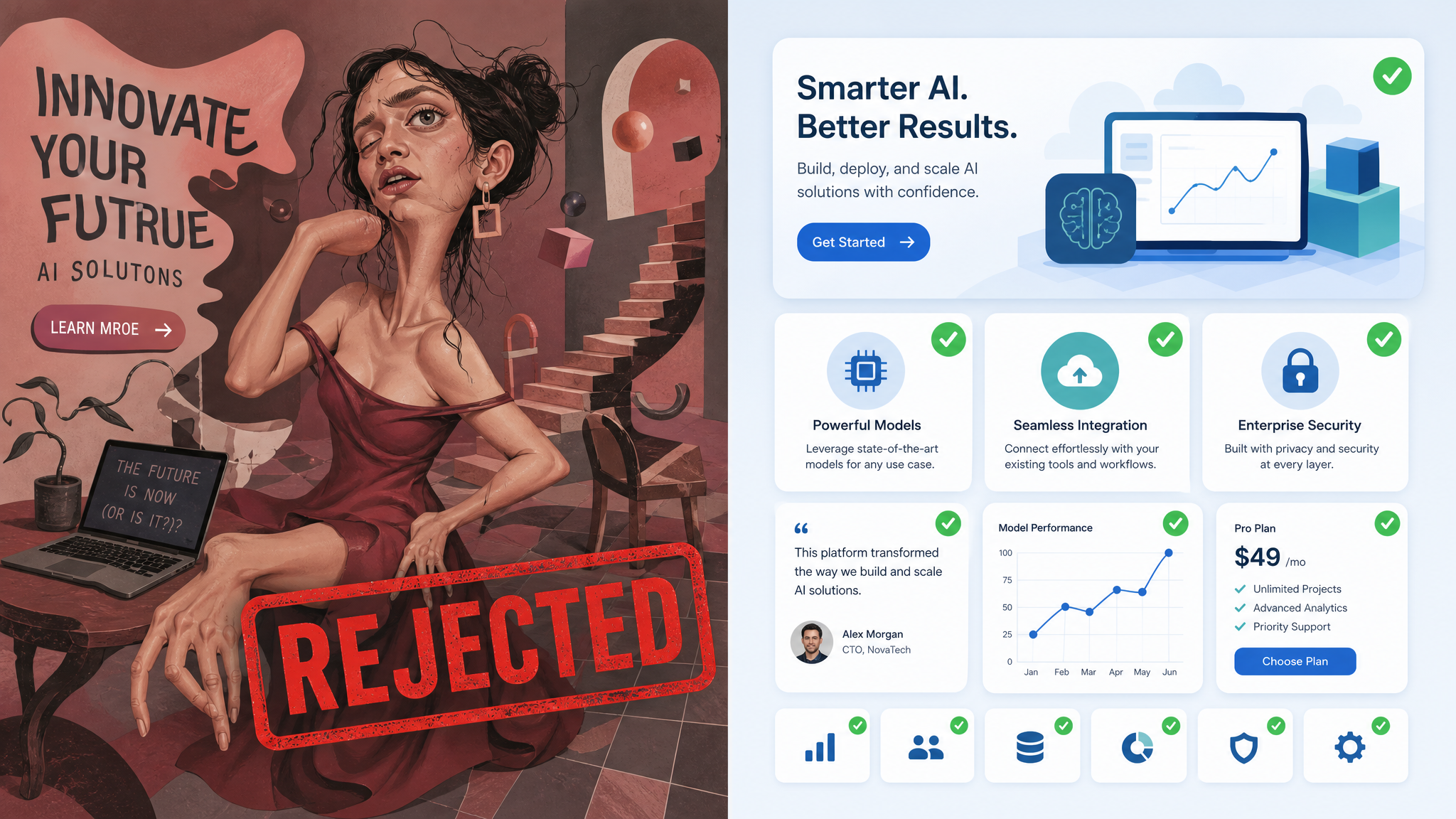
What went wrong? The generic AI had done exactly what Sarah asked it to do: create a beautiful "before and after" style image. But what the AI didn't know—and what a compliance-grade ad creative platform would have flagged instantly—is that Meta strictly prohibits implied "before and after" imagery for personal health and beauty products. The generic AI was a brilliant artist, but a terrible media buyer.
As artificial intelligence democratizes content creation, the line between "making a pretty picture" and "launching a profitable, compliant ad campaign" has never been starker. Today, we are exploring the fundamental differences between generic AI creators and compliance-grade AI ad creative platforms like Hawtads. We aren't here to bash general AI tools—they are incredible for concepting and art generation. But when it comes to the high-stakes environment of paid media, you need a tool built for the job.
Defining the Playing Field: Art vs. Advertising
To understand the difference, we first need to define the two categories of tools currently dominating the market.
The Generic AI Image Generator
Tools like Midjourney, DALL-E 3, and Stable Diffusion are the heavyweights of the generative AI world. They are built on massive, generalized datasets designed to respond to virtually any text prompt. Want a cyberpunk cat drinking coffee on Mars? You got it. Want a photorealistic rendering of a 1950s diner? Done.
Their primary objective is visual fidelity and prompt adherence. They do not care where the image is going, who is going to see it, or what rules govern the platform where it will be published. They are the digital equivalent of an incredibly talented freelance illustrator who has never read a platform terms-of-service document in their life.
The Compliance-Grade AI Ad Creative Platform
A compliance-grade platform, such as Hawtads, is built with a fundamentally different architecture. While it leverages powerful generative AI models under the hood, those models are wrapped in layers of advertising-specific logic, policy guardrails, and marketing frameworks.
The primary objective of a compliance-grade platform is profitable, safe media buying. It understands that an ad is not just an image; it is a carefully calibrated combination of visual, text, format, and platform rules designed to drive a specific user action without triggering algorithmic penalties.
Critical Difference 1: Advertising Policy Awareness and Guardrails
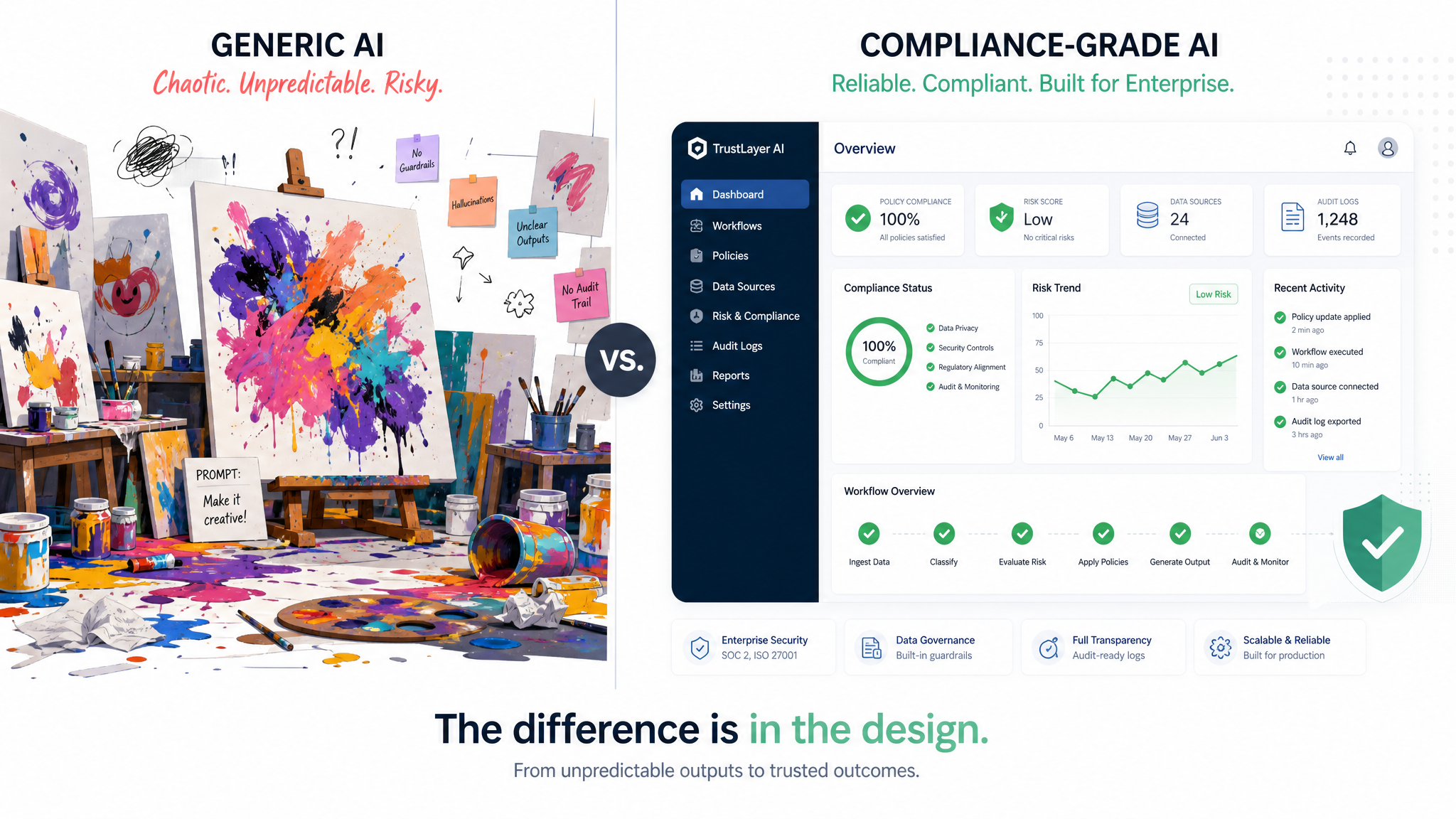
The most significant difference between these two types of platforms—and the one that will save your ad accounts from the dreaded ban-hammer—is policy awareness.
Advertising networks like Meta, Google, TikTok, and LinkedIn have complex, constantly evolving, and highly punitive ad policies. They govern everything from the amount of text allowed in an image to the depiction of personal attributes, financial promises, and health claims.
- The Generic AI Approach: A generic generator will happily create an image of a person looking depressed (violating Meta’s personal attributes policy), a realistic-looking fake interface (violating deceptive practices policies), or a chart showing guaranteed massive financial returns (violating unacceptable business practices). It operates in a vacuum of rules.
- The Compliance-Grade Approach: Platforms like Hawtads are built with pre-flight checks and policy guardrails. They are trained to understand the nuances of ad network rules. If you attempt to generate an ad for a weight-loss supplement, the AI is constrained by parameters that prevent it from generating prohibited "before-and-after" styles or making unrealistic visual promises. It actively steers the creative output toward compliant framing, ensuring that the assets you download are safe to upload.
The cost of a rejected ad isn't just the time wasted creating it. It’s the negative strike against your Business Manager, the higher CPMs that often follow account flags, and the potential for total account suspension. Compliance-grade AI acts as your first line of defense.
Critical Difference 2: Multi-Variant Copy and Messaging Alignment
An ad is never just a picture. It is a holistic unit of communication where the visual, the headline, the primary text, and the call-to-action must work in perfect synergy.
When you use a generic AI image generator, you are only solving one piece of the puzzle. Once you have your image, you must switch contexts. You open up ChatGPT or another text generator, try to explain the image you just made, and ask it to write copy. The result is often disjointed. The copy doesn't quite match the visual tone, or worse, the text generator includes non-compliant claims even if the image is safe.
Compliance-grade AI ad platforms treat the ad as a single, unified asset. When you generate creative in Hawtads, the platform understands the marketing objective. It doesn't just hand you a JPEG; it generates the visual alongside multi-variant, compliant copy options.
Because the AI understands the context of the visual it just created, the headlines directly reference the visual hooks. Furthermore, because it is an ad-specific tool, the text generation is also bound by the same compliance guardrails as the image generation. It won't write "Guaranteed to cure your anxiety" if it knows that violates health policies. It provides a complete, ready-to-test ad unit that is cohesive and safe.
Critical Difference 3: Spec Handling and Platform Formatting
If you have ever tried to run a generic AI image as a TikTok ad, you know the pain of formatting.
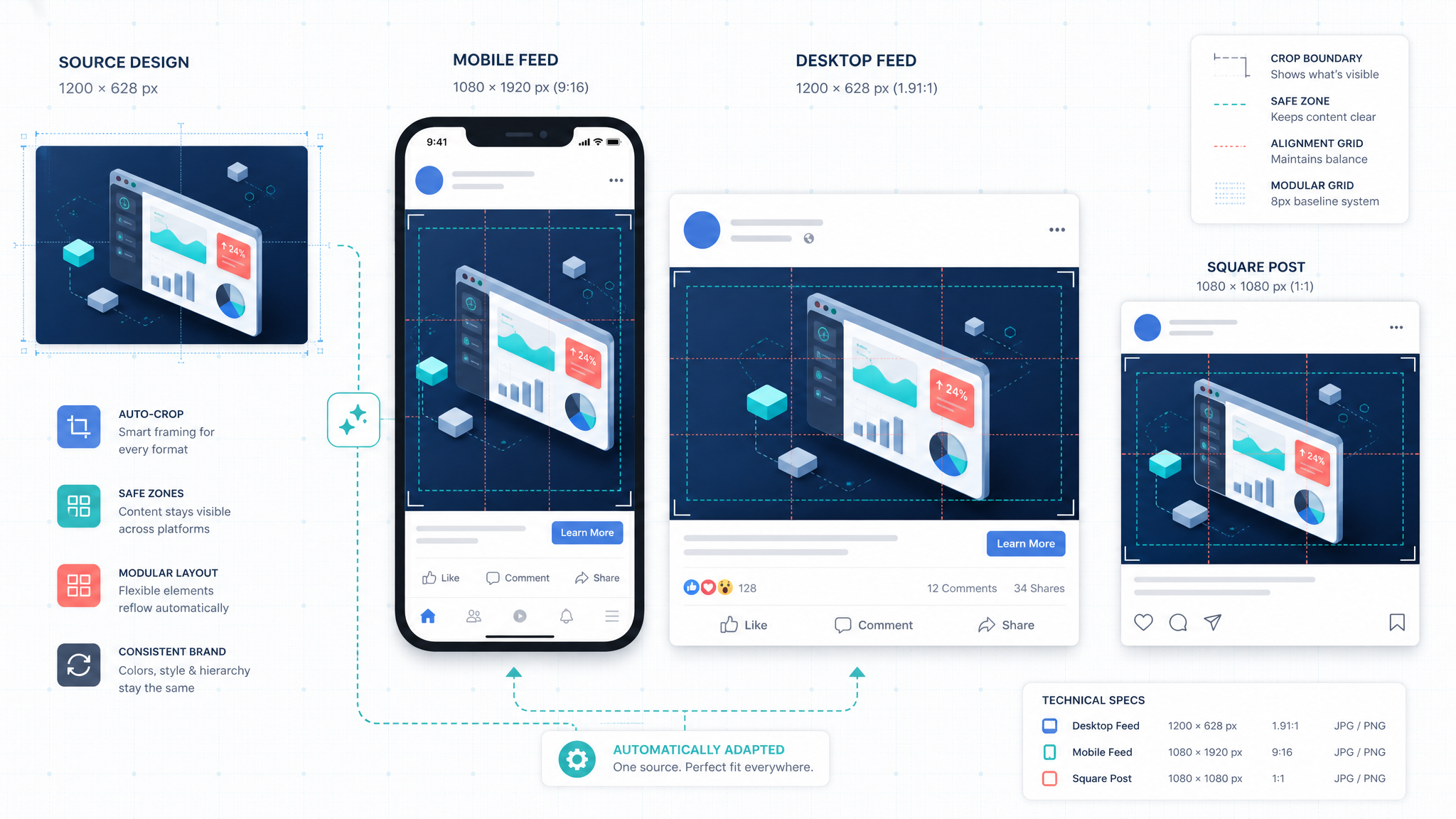
Generic AI tools generally output images in standard aspect ratios (1:1, 16:9, 3:2). But modern media buying is a multi-placement game. A single campaign might require a 1080x1080 square for the Instagram feed, a 1080x1920 vertical for TikTok and Reels, and a 1200x628 landscape for the Facebook Audience Network.
More importantly, platforms like TikTok and Instagram Reels have strict "safe zones." If you put crucial visual information or text in the bottom 20% of a vertical video or image, it will be covered by the user's caption and UI buttons. Generic AI doesn't know what a safe zone is.
A compliance-grade ad creative platform is built around media specs.
- Auto-Resizing: It automatically generates your creative across all necessary aspect ratios without distorting the core visual.
- Safe Zone Awareness: It ensures that focal points, generated text overlays, and key product placements remain strictly within the viewable safe zones of the target platform.
- Text-to-Image Ratios: While platforms have relaxed their strict 20% text rules, highly cluttered images still suffer in auction delivery. Compliance-grade tools optimize the visual layout for algorithmic preference.
Critical Difference 4: Audit Trails, Brand Safety, and IP Protection
For enterprise brands, large agencies, and regulated industries, the "black box" nature of generic AI is a massive legal and operational liability.
When an employee generates an image in a generic Discord-based AI tool, there is often little to no oversight. What was the exact prompt used? Did the prompt include a competitor's trademarked name to achieve a certain style? Did it inadvertently generate a likeness of a real celebrity? If a legal challenge arises, tracking down the origin of that specific asset can be nearly impossible.
Compliance-grade tools are designed for the enterprise environment. They prioritize brand safety and auditability.
Platforms like Hawtads provide a clear, trackable workflow. Every asset generated is tied to a specific user, a specific campaign, and a specific prompt history. Furthermore, compliance-grade platforms often utilize commercial-safe models that are explicitly trained to avoid generating copyrighted materials, trademarked logos, or recognizable public figures unless explicitly authorized. This provides legal teams and agency owners with the peace of mind that their creative isn't a ticking IP time bomb.
Critical Difference 5: Team Workflows and Collaboration
Marketing is a team sport. Media buyers, creative strategists, copywriters, and clients all need to collaborate to get a campaign live.
Generic AI tools are almost exclusively designed for single-player mode. You log into your account, you type a prompt, you download an image, and then you manually upload it to a Slack channel or a Google Drive to get feedback. It is a fragmented, inefficient process that leads to version control nightmares.
Compliance-grade AI platforms are built like modern SaaS products. They feature:
- Shared Workspaces: Entire teams can log in, view the creative pipeline, and iterate on assets together.
- Approval Flows: Media buyers can generate dozens of variations and route them to compliance officers or clients for one-click approval before they are ever downloaded.
- Asset Management: Winning creatives can be tagged, organized by campaign, and stored in a central repository, making it easy to analyze what worked and iterate on past successes.
- Direct Integrations: Many ad-specific platforms allow you to push approved creatives directly into your ad accounts, bypassing the manual download/upload dance entirely.
Critical Difference 6: Vertical Specialization and Nuance
Not all advertising is created equal. Selling a pair of sneakers requires a vastly different approach than acquiring leads for a financial services firm or driving app installs for an iGaming company.
Generic AI is a generalist. It applies the same logic to a shoe ad as it does to a crypto ad.
Compliance-grade AI understands vertical specialization. High-risk, highly regulated industries—such as Nutra (supplements), Finance, Crypto, and iGaming—have incredibly narrow windows of what is acceptable to ad networks.
For example, in the financial vertical, promising specific returns or using overly aggressive "get rich" imagery will trigger instant bans. A platform like Hawtads can be tailored to understand the specific compliance language and visual boundaries of these verticals. It knows how to generate compelling, high-converting creative that relies on compliant emotional hooks (like security, peace of mind, or technological advancement) rather than cheap, non-compliant tricks.
The Ultimate Comparative Checklist: Which Tool Do You Need?
Still wondering which tool is right for your workflow? Use this quick comparative checklist to evaluate your needs.
Choose a Generic AI Generator if:
- You are creating concept art, mood boards, or internal presentations.
- You are generating blog headers or organic social media posts where platform ad policies do not apply.
- You have a dedicated compliance and design team willing to manually vet, crop, and edit every image generated.
- Your primary goal is artistic exploration and limitless creative freedom, regardless of commercial viability.
Choose a Compliance-Grade AI Platform (like Hawtads) if:
- Your primary goal is launching profitable paid media campaigns on Meta, Google, TikTok, or native networks.
- You want to eliminate ad account bans and restrictions caused by policy violations.
- You need complete ad units (image + compliant multi-variant copy) generated simultaneously.
- You require assets automatically formatted for specific platform specs and safe zones.
- You manage a team and need centralized workflows, approval processes, and clear audit trails.
- You operate in a strict or highly regulated vertical (Finance, Health, iGaming) and need built-in guardrails.
The True Cost of the Wrong Tool
It is tempting to look at the low monthly subscription cost of a generic AI tool and think you are saving money. But in performance marketing, the true cost of a tool isn't its subscription fee; it's the impact it has on your workflow and your ad accounts.
Every time a media buyer spends two hours trying to force a generic AI to fix a weird finger, resize an image for a TikTok safe zone, and write compliant copy to match, you are losing money. Every time an ad is rejected, pausing your campaign and threatening your Business Manager standing, you are losing money.
Compliance-grade AI ad creative platforms are not just image generators. They are risk-mitigation tools, workflow accelerators, and performance multipliers. They bridge the gap between the limitless potential of generative AI and the strict, unforgiving reality of modern media buying.
In the end, generic AI will give you a beautiful picture. Compliance-grade AI will give you a profitable campaign. The choice depends entirely on what you are trying to build.