
The 3 AM Scramble: When Your Campaign Launch Gets Blocked by Compliance
The 3 AM Scramble: When Your Campaign Launch Gets Blocked by Compliance The coffee is cold, the office is silent, and your eyes are stinging from the blue light of your dual-monitor setup. It’s 3:00 AM. You’ve spent the last six weeks perfecting a global campaign for a new fintech product. The creat
The 3 AM Scramble: When Your Campaign Launch Gets Blocked by Compliance
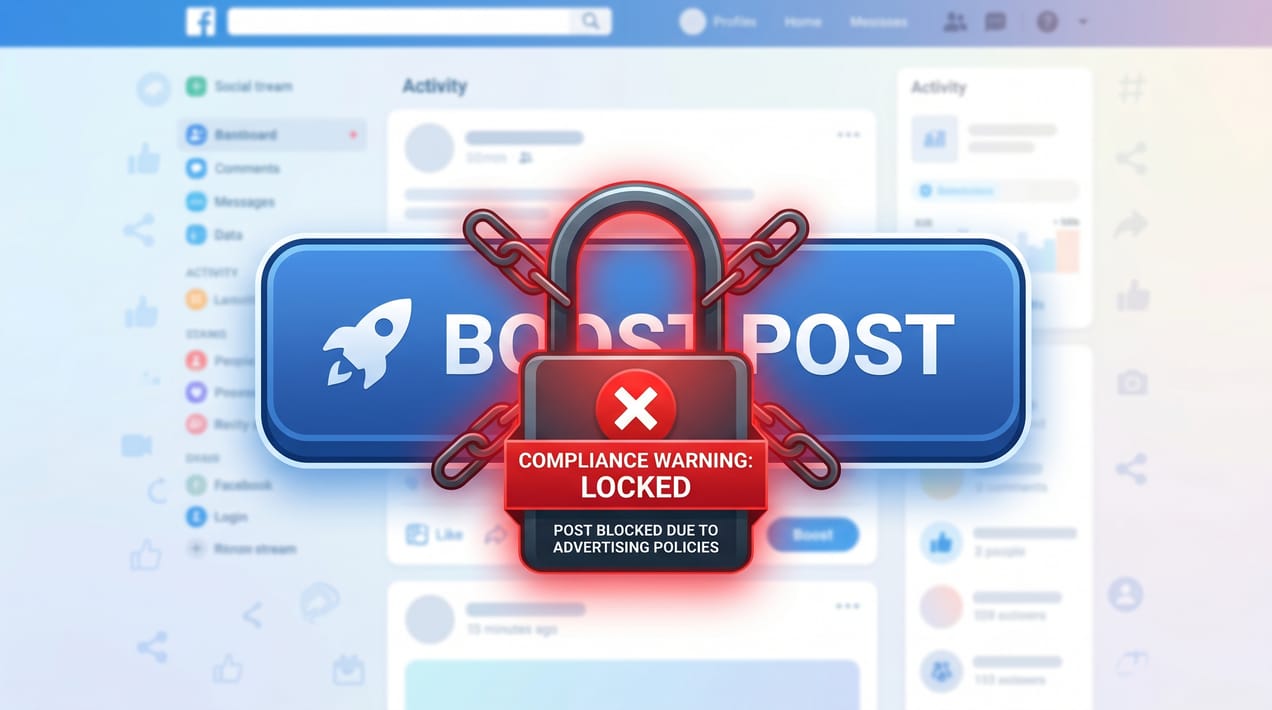
The coffee is cold, the office is silent, and your eyes are stinging from the blue light of your dual-monitor setup. It’s 3:00 AM. You’ve spent the last six weeks perfecting a global campaign for a new fintech product. The creative is stunning, the targeting is surgical, and the budget is approved. You hit "Publish," expecting a smooth rollout, but instead, you’re met with the digital equivalent of a brick wall: an ad campaign compliance block.
Suddenly, the "Launch Day" celebration you planned feels like a distant memory. Instead of monitoring conversions, you’re frantically emailing legal teams and refreshing ad manager screens, trying to figure out which specific word or pixel triggered the rejection. Does this sound familiar? If you work in a regulated industry like finance, healthcare, or iGaming, this "scramble" isn't just a nightmare—it’s often a Tuesday.
In the high-stakes world of regulated advertising, the gap between a creative vision and a live ad is guarded by a complex web of platform policies and legal requirements. When those two worlds collide at the last minute, the results are expensive, exhausting, and entirely preventable. According to industry benchmarks, nearly 25% of all delayed campaign launches in regulated sectors are attributed directly to campaign launch compliance issues that weren't caught during the creative phase.
The True Cost of the "Last-Minute" Rejection
When an ad gets blocked, most marketers think about the immediate inconvenience. But the ripple effects go much deeper than a few hours of lost sleep. There is a tangible financial and operational toll that comes with an ad blocked compliance notification. Have you ever calculated the "idle cost" of your media team while they wait for a compliance fix?
For large-scale advertisers, every hour a campaign sits in "Rejected" status is an hour of lost data, lost market share, and wasted overhead. In highly competitive windows—like a product launch or a seasonal event—being offline for even 12 hours can result in a 15-20% increase in your eventual Customer Acquisition Cost (CAC) because you've lost the initial momentum.
Beyond the numbers, there is the "trust tax." When your regulated ad launch problems become a recurring theme, the relationship between the marketing department and the legal/compliance team begins to sour. Marketing sees Compliance as the "Department of No," while Compliance sees Marketing as reckless. This friction slows down every future project, creating a cycle of frustration that stifles innovation.
A recent study by Forrester found that organizations with high friction between marketing and compliance teams take 40% longer to bring new digital products to market. Can your brand afford that kind of handicap in a market that moves at the speed of a scroll?
Why the "Human-Only" Review Model is Breaking
For years, the standard operating procedure has been a linear one: Marketing creates, Legal reviews, Platform decides. But in an era where a single brand might run 5,000 different ad variations across ten different jurisdictions, the human-only review model is fundamentally broken. Humans are great at nuance, but we are terrible at catching a missing "Terms and Conditions" link in the 499th version of a banner ad.
The complexity of modern advertising platforms—Meta, Google, TikTok, and LinkedIn—adds another layer of difficulty. Each platform has its own evolving set of "Community Standards" and "Advertising Policies" that often change without a formal announcement. What was compliant on a Tuesday might be a violation by Thursday.
When you rely solely on manual checks, you’re essentially betting your entire launch on the hope that your compliance officer had enough sleep and that the platform’s AI reviewer is having a "good day." Statistics show that manual compliance reviews have an error rate of approximately 12-15%, often missing small but critical details like font size requirements for disclaimers or prohibited keywords in specific geographic regions.
Are you still asking your most expensive legal talent to spend their hours squinting at font sizes on mobile mockups? Or is there a better way to ensure your ad campaign compliance block never happens in the first place?
The Platform Paradox: Why "Safe" Ads Still Get Flagged
One of the most frustrating aspects of campaign launch compliance issues is the "False Positive." You’ve followed every rule, your legal team has signed off, and yet, the platform’s automated system still flags your ad. This is the Platform Paradox: the very AI tools designed to keep platforms safe are often too blunt to understand the nuance of a legitimate, regulated ad.
Platforms like Meta and Google use machine learning models to scan billions of ads. These models are trained to be "risk-averse." If an ad even smells like a violation—perhaps because of a specific combination of colors, a "trigger" word used in a benign context, or a landing page that loads 0.5 seconds too slowly—the system defaults to "Reject."
Once an ad is rejected, you enter the "Appeal Purgatory." Your appeal might be reviewed by another AI, or it might sit in a queue for 48 hours before a human looks at it. During this time, your competitors are capturing the audience you spent months researching. Data suggests that 30% of rejected ads in regulated categories are eventually overturned on appeal, but by then, the damage to the campaign's momentum is already done.
How much revenue are you leaving on the table while your ads sit in an "Under Review" loop? The key isn't just knowing the rules; it's knowing how the platforms interpret those rules.
The "Shift Left" Strategy: Moving Compliance to the Creative Stage
In software development, there is a concept called "Shifting Left." It means moving testing and quality checks as early as possible in the development process rather than waiting until the end. Regulated advertisers need to adopt this same mindset to solve regulated ad launch problems.
Currently, most compliance checks happen at the very end of the creative lifecycle. The "Shift Left" approach integrates compliance into the brainstorming and design phase. Imagine if your designers knew, in real-time, that a specific image-to-text ratio would trigger a flag, or that a headline violated a specific FINRA or FCA regulation before they even finished the first draft.
By automating the "low-level" compliance checks—things like disclaimer presence, prohibited keywords, and platform-specific technical requirements—you free up your legal team to focus on high-level strategy and complex risk assessments. This doesn't just prevent an ad blocked compliance event; it actually speeds up the entire creative output.
According to internal data from high-growth fintech firms, companies that implement automated pre-checks during the creative process see a 65% reduction in ad rejection rates and a 50% faster time-to-market for new campaigns. It’s about building a "Compliance-First" creative engine, not a "Compliance-Last" bottleneck.
Turning Compliance from a Hurdle into a Competitive Advantage
What if compliance wasn't the thing that slowed you down, but the thing that allowed you to move faster than everyone else? In regulated industries, speed is a massive competitive advantage. If you can launch a reactive campaign in response to a market event in 4 hours while your competitor takes 4 days to get legal approval, you win.
Achieving this requires a move away from static spreadsheets and manual emails toward a centralized, AI-powered compliance hub. This hub acts as a single source of truth for both marketing and legal teams. It ensures that every asset created is automatically checked against a library of global regulations and platform-specific rules.
When you have a system that can scan thousands of assets in seconds, you can afford to be more experimental. You can test more variations, target more regions, and push the boundaries of your creative, knowing that the "safety net" is always on. You stop fearing the ad campaign compliance block and start focusing on performance.
Think about it: how much more confident would your team be if they knew every ad they submitted for launch had already passed a "mock" platform review? This level of certainty is what separates the market leaders from those constantly stuck in the 3 AM scramble.
Practical Steps to End the 3 AM Scramble
If you’re ready to stop firefighting and start launching, here are three actionable steps you can take today to minimize campaign launch compliance issues:
- Audit Your Rejections: Look back at the last six months of rejected ads. Was there a pattern? Were they flagged for "Sensationalist Content," "Misleading Claims," or "Technical Requirements"? Identifying the "usual suspects" helps you create a checklist for future creative briefs.
- Standardize Your Disclaimers: Create a global library of pre-approved disclaimers and "Safe" copy blocks. Ensure these are easily accessible to your creative team so they aren't "guessing" what legal wants.
- Automate the Boring Stuff: Use technology to handle the repetitive tasks. AI tools can now check for things like contrast ratios, font sizes, and the presence of mandatory icons (like the 18+ symbol in gambling ads) much faster and more accurately than a human can.
The goal isn't to remove humans from the process; it's to empower them. When your team isn't bogged down by the minutiae of ad blocked compliance, they can spend their time on what actually drives ROI: great storytelling and strategic thinking.
A Smarter Way to Launch
The 3 AM scramble doesn't have to be a rite of passage for every campaign launch. The stress of a blocked ad, the friction between teams, and the lost revenue of a delayed start are all symptoms of an outdated workflow. In a world where regulations are getting tighter and platforms are getting more automated, your compliance process needs to evolve.
At Hawtads, we believe that compliance should be a catalyst for growth, not a barrier to it. By integrating AI-powered compliance checks directly into your creative workflow, we help brands in regulated industries navigate the complex landscape of platform policies and legal requirements with total confidence.
Imagine hitting "Publish" and knowing—not just hoping—that your campaign will go live without a hitch. No more late-night emails. No more "Appeal Purgatory." Just clean, compliant, and high-performing ads delivered at the speed of your business. Isn't it time you put the scramble behind you and started launching with certainty?
Ready to see how AI can transform your compliance workflow? Explore how a proactive approach to creative automation can protect your brand and accelerate your growth.