
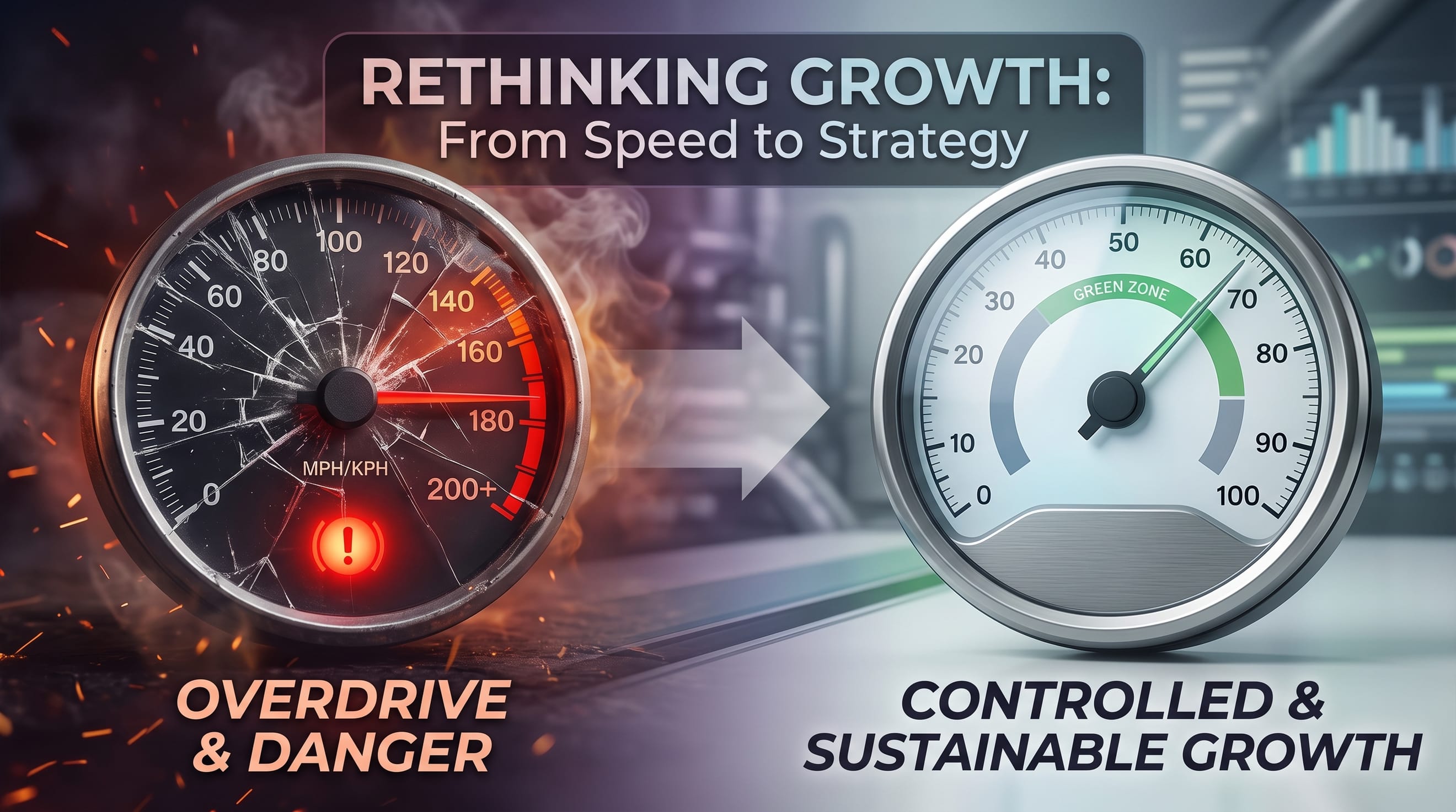
The Death of 'Move Fast and Break Things' in Regulated Advertising
The Death of "Move Fast and Break Things" in Regulated Advertising Imagine this: Your creative team just spent three weeks crafting the perfect video campaign for your new fintech product. The hooks are sharp, the visuals are stunning, and the early engagement metrics are through the roof. You go
The Death of "Move Fast and Break Things" in Regulated Advertising
Imagine this: Your creative team just spent three weeks crafting the perfect video campaign for your new fintech product. The hooks are sharp, the visuals are stunning, and the early engagement metrics are through the roof. You go to sleep feeling like a marketing genius, only to wake up to a "Permanent Account Suspension" notification from Meta and a sternly worded letter from a regulatory body.
In a split second, your entire regulated advertising strategy has gone from a growth engine to a liability. The "Move Fast and Break Things" mantra, famously coined by Mark Zuckerberg in the early days of Facebook, was the North Star for a generation of marketers. But in today’s landscape, if you break things in a regulated industry, those things stay broken—and they usually come with a six-figure price tag.
The era of reckless experimentation is over. For those of us in finance, healthcare, alcohol, or gaming, the stakes have evolved from "getting a slap on the wrist" to "losing your license to operate." But does that mean we have to move at a snail’s pace? Not necessarily. It just means we need a new playbook.
The High Cost of the "Wild West" Mentality
For years, digital marketing felt like the Wild West. You could push the envelope on claims, omit a few disclaimers in the name of "clean design," and generally ask for forgiveness rather than permission. That window has slammed shut. Regulators have finally caught up with the speed of digital media, and they aren't happy with what they’ve found.
According to recent data from the FTC, consumer losses to fraud and deceptive marketing practices reached nearly $10 billion in 2023, a 14% increase over the previous year. This surge has triggered a massive crackdown on how brands communicate. It’s no longer just about the big players; small and mid-sized firms are now squarely in the crosshairs of regulated industry marketing enforcement.
When you "break things" today, you aren't just breaking a line of code or a landing page. You’re breaking consumer trust and, more importantly, your relationship with the platforms that allow you to reach them. Have you considered what a 30-day ad account ban would do to your quarterly revenue targets?
Why Compliance First Advertising is the New Growth Hack
It sounds counterintuitive, doesn't it? Usually, we think of compliance as the "Department of No"—the team that slows down launches and kills the best ideas. But in the current climate, compliance first advertising is actually the fastest way to scale. When you build guardrails into your creative process from day one, you eliminate the "stop-and-start" friction that kills momentum.
Think about the traditional workflow: Creative builds an ad, it goes to Legal, Legal shreds it, it goes back to Creative, and the cycle repeats for two weeks. By the time the ad is approved, the market trend has passed. Or worse, the ad is launched without a full review, gets flagged by an AI moderator, and your entire account is put under a microscope.
A staggering 70% of marketers in highly regulated sectors report that compliance delays are their number one barrier to hitting growth targets. By flipping the script and making compliance a foundational part of your responsible advertising growth plan, you aren't slowing down; you're clearing the tracks so the train can actually run at full speed.
The Algorithm is Your New Auditor
We used to worry about a human auditor sitting in a cubicle somewhere reviewing our TV scripts. Today, your auditor is an algorithm that processes millions of data points per second. Platforms like Google and Meta use sophisticated AI to scan every pixel and every word of your ad creative before it even goes live.
These AI moderators don't care about your "creative intent." They don't understand nuance or "reading between the lines." If your ad for a high-yield savings account doesn't have the required APY disclosures in the right font size, the system flags it instantly. If your healthcare ad makes an unsubstantiated claim about a supplement, it’s gone.
Statistics show that Google blocked or removed over 5.5 billion ads in 2023 alone for policy violations. A significant portion of these weren't malicious actors; they were legitimate brands that simply failed to keep up with shifting platform requirements. If the platforms are using AI to catch you, doesn't it make sense to use AI to protect yourself?
Bridging the Gap Between Creative and Legal
The biggest bottleneck in any regulated advertising strategy is the cultural divide between the "creatives" and the "compliance officers." One group wants to win awards and drive clicks; the other wants to avoid lawsuits and fines. This tension is where most mistakes happen.
How do we bridge this gap? It starts with shared language and shared tools.
- Standardize the Rules: Don't make your creative team guess what "fair and balanced" means. Create a living library of pre-approved claims and mandatory disclaimers.
- Automate the Boring Stuff: Why is a highly paid lawyer checking for the presence of a T&C link? That’s a task for a machine, not a human.
- Shorten the Feedback Loop: The longer the gap between creation and feedback, the more expensive the fix becomes.
When you empower your creative team with the tools to self-correct, you transform compliance from a hurdle into a superpower. Imagine a world where your designers know an ad is compliant before they hit the "send for approval" button. That’s the level of efficiency required to compete in 2024.
The Psychology of Responsible Advertising Growth
There’s a psychological component to this shift as well. Consumers are more skeptical than ever. They’ve been burned by fine print and "too good to be true" offers in the fintech and wellness spaces. In this environment, transparency isn't just a legal requirement; it’s a competitive advantage.
Data from Edelman’s Trust Barometer suggests that 81% of consumers say they need to be able to trust a brand to do what is right before they buy from them. When your ads are clear, compliant, and honest, you aren't just avoiding a fine; you're building a brand that can survive the long haul. Responsible advertising growth is about lifetime value (LTV), not just a quick conversion on a misleading CTA.
Are you building a brand that people can trust, or are you just trying to trick the algorithm for one more day of "cheap" leads? The latter is a dying business model.
The Tech Stack of the Modern Marketer
If "Move Fast and Break Things" is dead, what replaces it? The new mantra is "Move Fast with Certainty." This requires a complete rethink of your marketing tech stack. You wouldn't dream of running a modern ad campaign without an attribution tool or a CRM, so why are you still managing compliance with spreadsheets and email chains?
The modern regulated industry marketing stack must include automated creative auditing. This technology allows you to scan your entire library of assets against both government regulations and platform-specific policies in seconds. It’s about having a "digital safety net" that catches the human errors that are inevitable in a high-volume creative environment.
By integrating tools like Hawtads, brands are finding they can actually increase their creative output by 3x or 4x because the fear of "breaking things" has been removed. When you have an AI-powered partner checking your work in real-time, you can afford to be more daring with your hooks and more prolific with your testing.
Actionable Takeaways for Your Strategy
So, how do you transition from the old way of thinking to the new "Compliance First" reality? It starts with three practical steps you can take this week:
- Audit Your "Friction Points": Map out exactly how an ad goes from an idea to a live placement. Where does it sit for the longest? Is it waiting for a human to check a box that a machine could check?
- Centralize Your Guardrails: Create a single source of truth for all regulatory requirements. This shouldn't be a 50-page PDF that no one reads; it should be integrated into your creative workflow.
- Invest in Pre-Flight Tools: Stop using the live ad platform as your testing ground. If you're finding out an ad is non-compliant because it got rejected by Meta, you're already behind.
The brands that will dominate the next decade are the ones that realize compliance isn't a cost center—it’s a growth accelerator. By removing the risk of account bans and legal action, you give your team the freedom to innovate without looking over their shoulders.
Move Fast, But Don't Break Your Future
The "Move Fast and Break Things" era was a fun ride while it lasted, but the landscape of regulated advertising strategy has grown up. Today, speed is a byproduct of systems, not the result of recklessness. You can still be the first to market, you can still have the most engaging creative, and you can still out-hustle your competition. You just have to do it with the certainty that your ads won't be the reason your company makes the front page for the wrong reasons.
The transition to a compliance-first mindset doesn't have to be a headache. It’s simply about upgrading your process to match the sophistication of the regulators and the platforms you play on. When you stop fighting the rules and start automating the way you follow them, you’ll find that you can move faster than ever before.
If you're tired of the constant back-and-forth between your creative and legal teams—or if the fear of a platform ban is keeping you from scaling your best ideas—it might be time to look at how technology can bridge the gap. At Hawtads, we’ve built the AI-powered compliance engine specifically for industries where the rules matter most. We help you find that sweet spot where high-performing creative meets rigorous compliance, ensuring your responsible advertising growth is never interrupted. Perhaps it's time to see how moving fast with certainty can change your bottom line.